The short answerFor carded diecast, judge the card and blister first - most collectors keep them sealed. For loose cars, check paint chips, tampo (printed graphic) wear, wheels and axles, and missing parts. Photograph the card front and back, or the car from the top, both sides and the base.
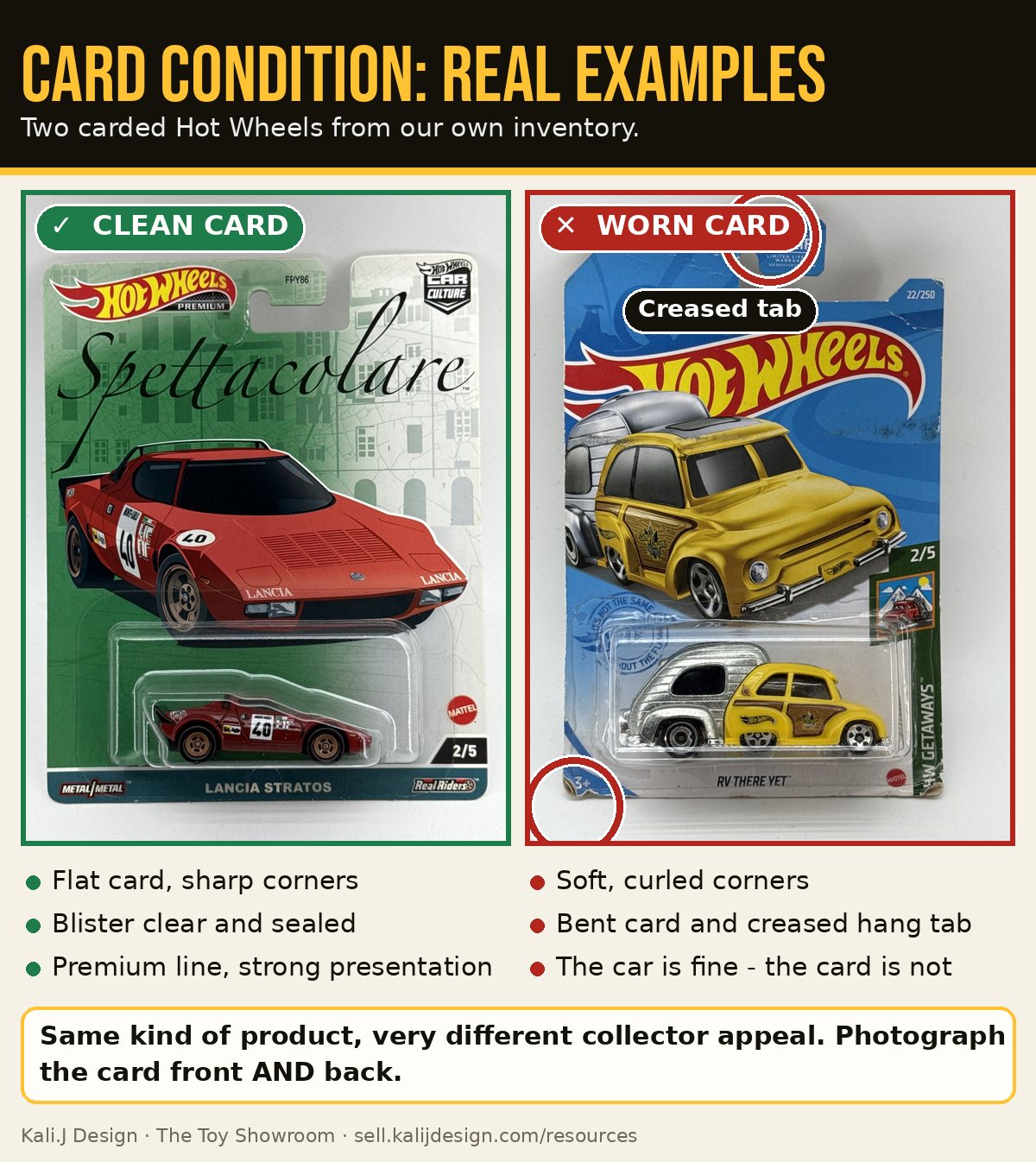
Carded cars: card and blister
Short cards and long cards are thin, so they bend and crease easily in bins and pockets. Check the corners, the hang tab and the back of the card, then the blister: clear, undented and sealed flat all the way around. Everything in our packaging guide applies to carded diecast.
Card condition
- What it is
- Corners, creases, bends, tab damage and edge wear on the backing card.
- How to spot it
- Look along the card edge at eye level for bends, and tilt it to find creases.
- Why it matters
- Many diecast buyers display cards on walls, so the card is part of the item.
- What to photograph
- Card front and back, and any corner or tab damage close up.
- When it becomes serious
- Creases through the art or blister area.
Blister condition
- What it is
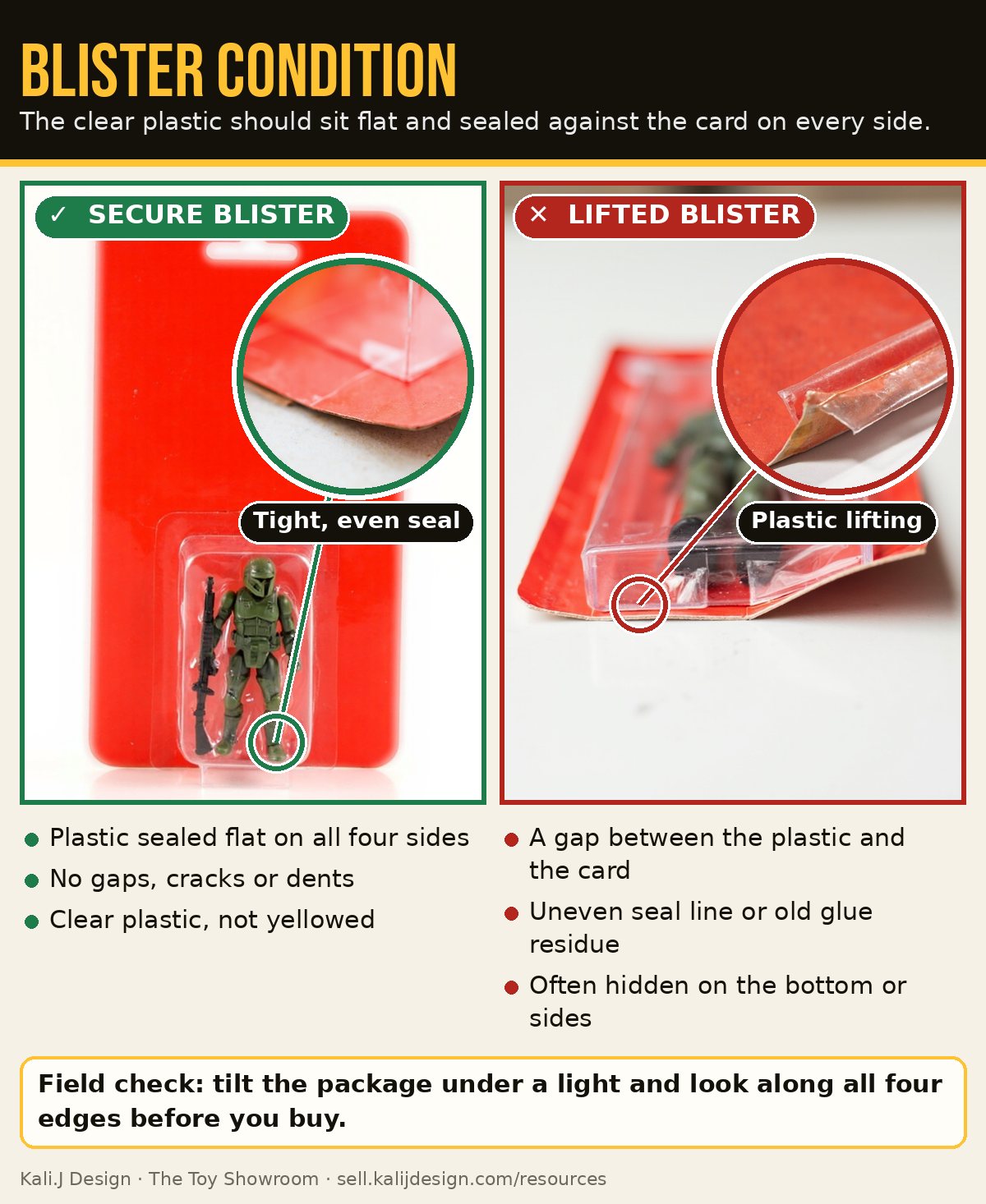
- Cracks, dents, yellowing or lifting of the plastic bubble over the car.
- How to spot it
- Check the bubble from the side and around its rim.
- Why it matters
- A cracked or lifting blister makes a "sealed" car look opened.
- What to photograph
- The blister from an angle.
- When it becomes serious
- Any crack or lift large enough to move the car.
Wheel and axle issues
- What it is
- Bent axles, wobbly or missing wheels, wheels that do not roll.
- How to spot it
- Roll loose cars on a flat surface and look at them from the front: wheels should be straight.
- Why it matters
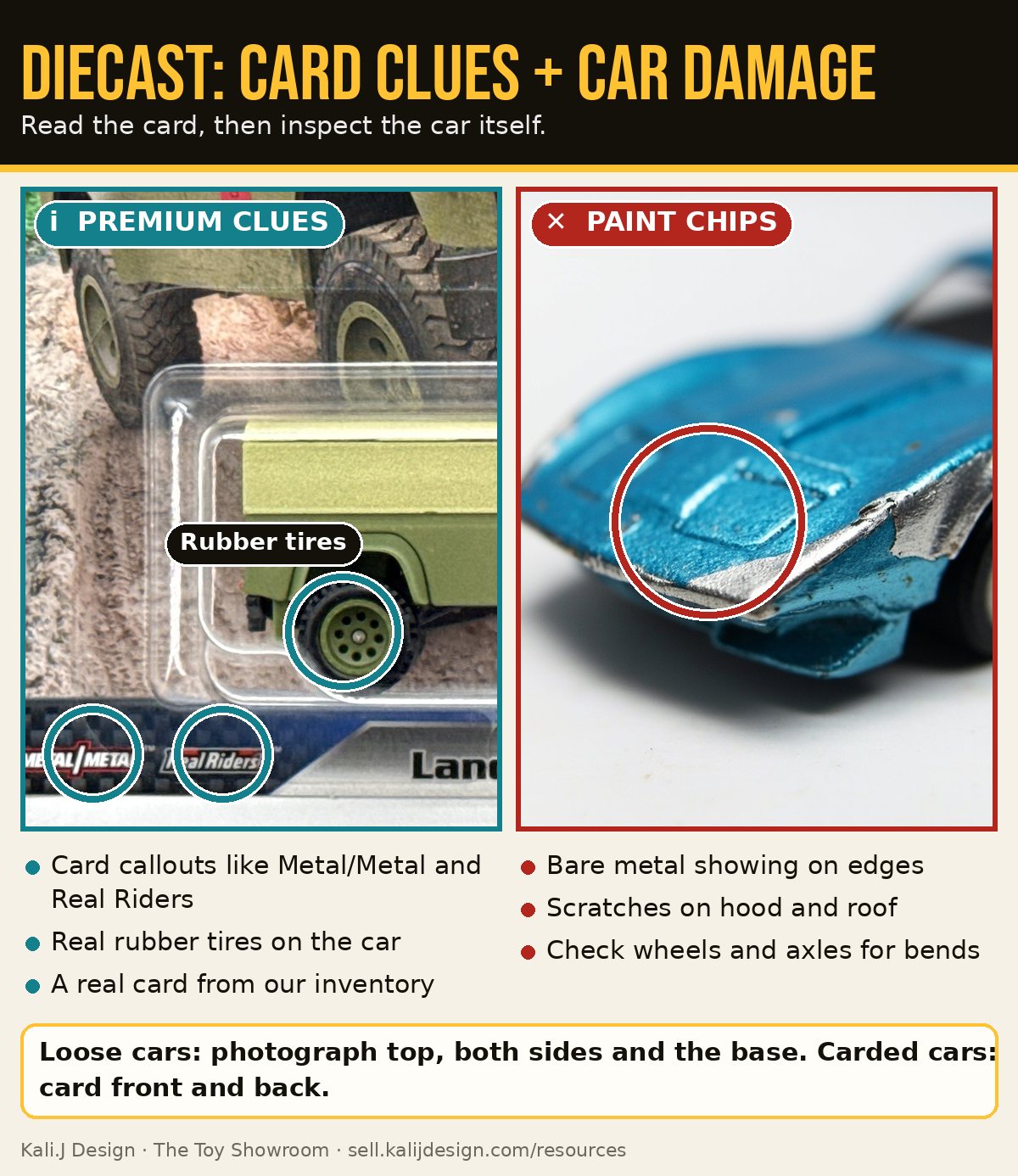
- Wheel type is also an identifier - rubber tires on some premium and special releases, plastic wheels on most basic cars - so swapped or damaged wheels matter.
- What to photograph
- The car from the front and the base.
- When it becomes serious
- Bent axles or wheels that do not match the release.
Paint chips and scratches
- What it is
- Areas where paint has flaked off to bare metal, or surface scratches.
- How to spot it
- Check edges: hood, fenders, roof, spoilers. Chips show as silver or gray.
- Why it matters
- Paint is the most visible condition point on a loose car.
- What to photograph
- Top and both sides in good light, plus close-ups of chips.
- When it becomes serious
- Heavy chipping across the body.
Tampos
- What it is
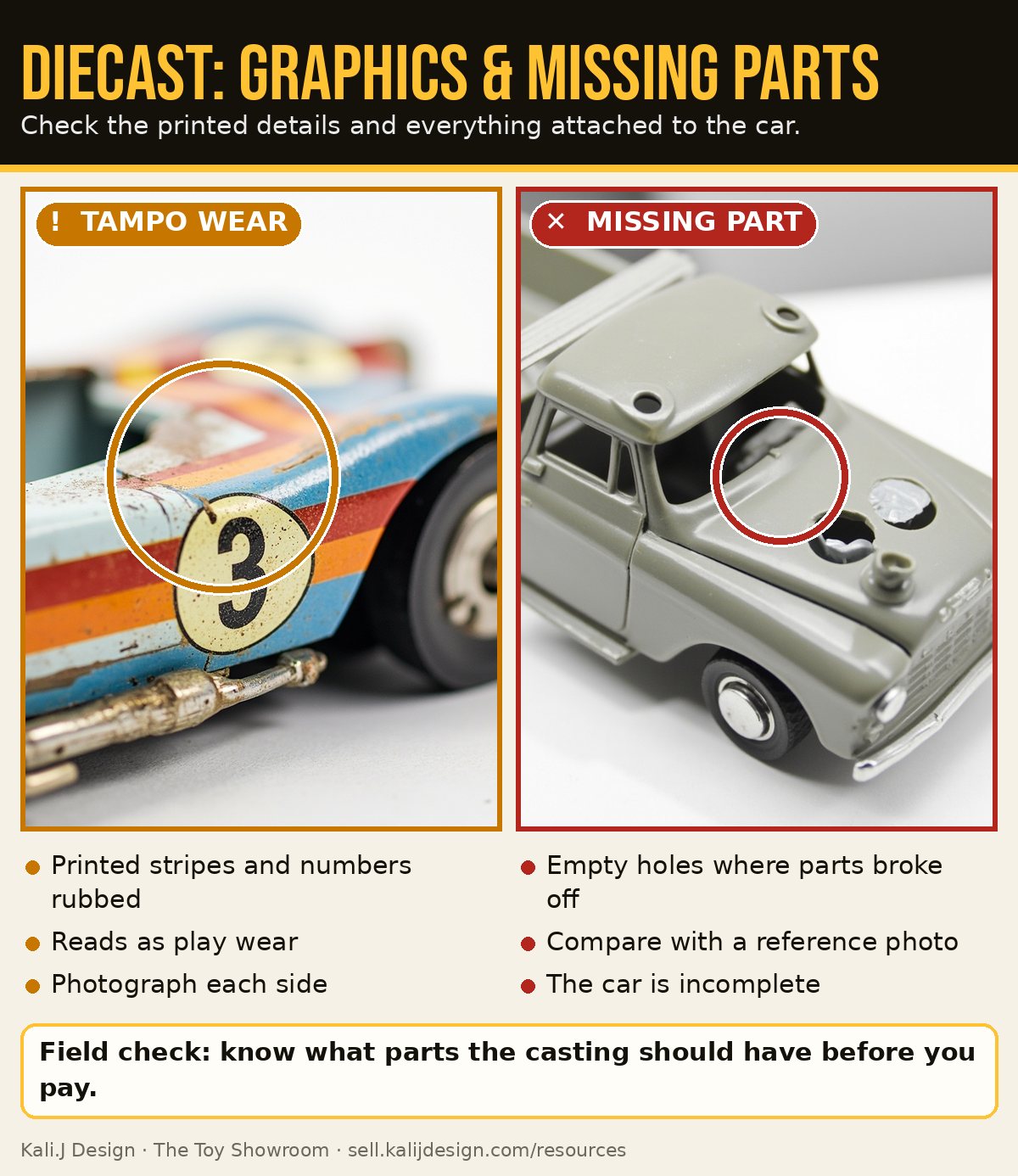
- The printed graphics - numbers, logos, stripes.
- How to spot it
- Look for rubbed, scratched or partly missing graphics. Collector guides such as Muncle Mike's note that factory tampos are sharp, while printed-on replacements often look pixelated.
- Why it matters
- Tampo wear reads as play wear; tampo differences can also point to a variation or a repaint.
- What to photograph
- Every side with graphics.
- When it becomes serious
- Graphics that look reprinted or do not match the release.
Missing parts
- What it is
- Spoilers, mirrors, engines, surfboards, trailers and other attached pieces.
- How to spot it
- Compare with a reference photo of the same casting and release.
- Why it matters
- Missing parts make a loose car incomplete.
- What to photograph
- Where the part should be.
- When it becomes serious
- When a signature part is gone.
Packaging variations
- What it is
- Different card designs, languages or card art for the same car.
- How to spot it
- Compare your card with reference photos of the same release.
- Why it matters
- Some variations interest specialists. Most do not change value much - do not assume they do.
- What to photograph
- Card front and back.
- When it becomes serious
- Not a flaw - just describe it accurately.
Factory errors vs later damage
- What it is
- A factory error happened during production (missing tampo, wrong wheels sealed in the blister). Later damage happened after.
- How to spot it
- A true factory error on a carded car is visible inside a clearly untouched blister.
- Why it matters
- Some collectors seek documented factory errors; damage is just damage.
- What to photograph
- The error, plus the unbroken blister around it.
- When it becomes serious
- When a loose car with damage is described as an "error".
Loose diecast photo checklist
- Top view
- Both sides
- Front and back
- The base, so the casting name and markings are readable
- Any chips or bent parts close up
Common diecast mistakes
- Reading the base year as the release yearThe year on the base is generally the casting's copyright year, not the year your car was made - see our Hot Wheels guide.
- Treating every variation as rareMost variations are common. Check real sold prices, not asking prices.
- Storing carded cars loose in binsCards bend and blisters crack. Store them flat or upright in a box.
Related guides
Selling Hot Wheels & DiecastWhat Hot Wheels and diecast Kali.J Design buys, how to identify lines like Premium, Treasure Hunts and Red Line Club, what condition we prefer, what to photograph and common mistakes.
Carded & Boxed Packaging ConditionHow to inspect carded and boxed collectibles: corners, creases, blister lifting, reseals, yellowing, stickers, window boxes and missing inserts - with photos of what to look for.

Treasure Hunter ToolkitWhere to find yard sales, garage sales, estate sales, flea markets and thrift stores near you, which apps to use, and how to plan a sourcing trip - without sharing your location with us.
Found one?
Seller Network members can snap a photo and ask the Sourcing Copilot. Anyone can send photos for an official quote based on real sold prices.
Looking to buy instead? Shop diecast at The Toy Showroom · Shop Hot Wheels at The Toy Showroom