Does box condition affect action figure value?
Yes - often a lot. Buyers of sealed figures, carded diecast and boxed toys are usually displaying the package, so they compare packaging condition closely. Grading companies such as Action Figure Authority and Collector Archive Services grade the package as part of a sealed item, which tells you how seriously collectors take it. Many sellers also use a loose "C1 to C10" package scale, but it has no single official definition, so describe the actual flaws instead of quoting a number.
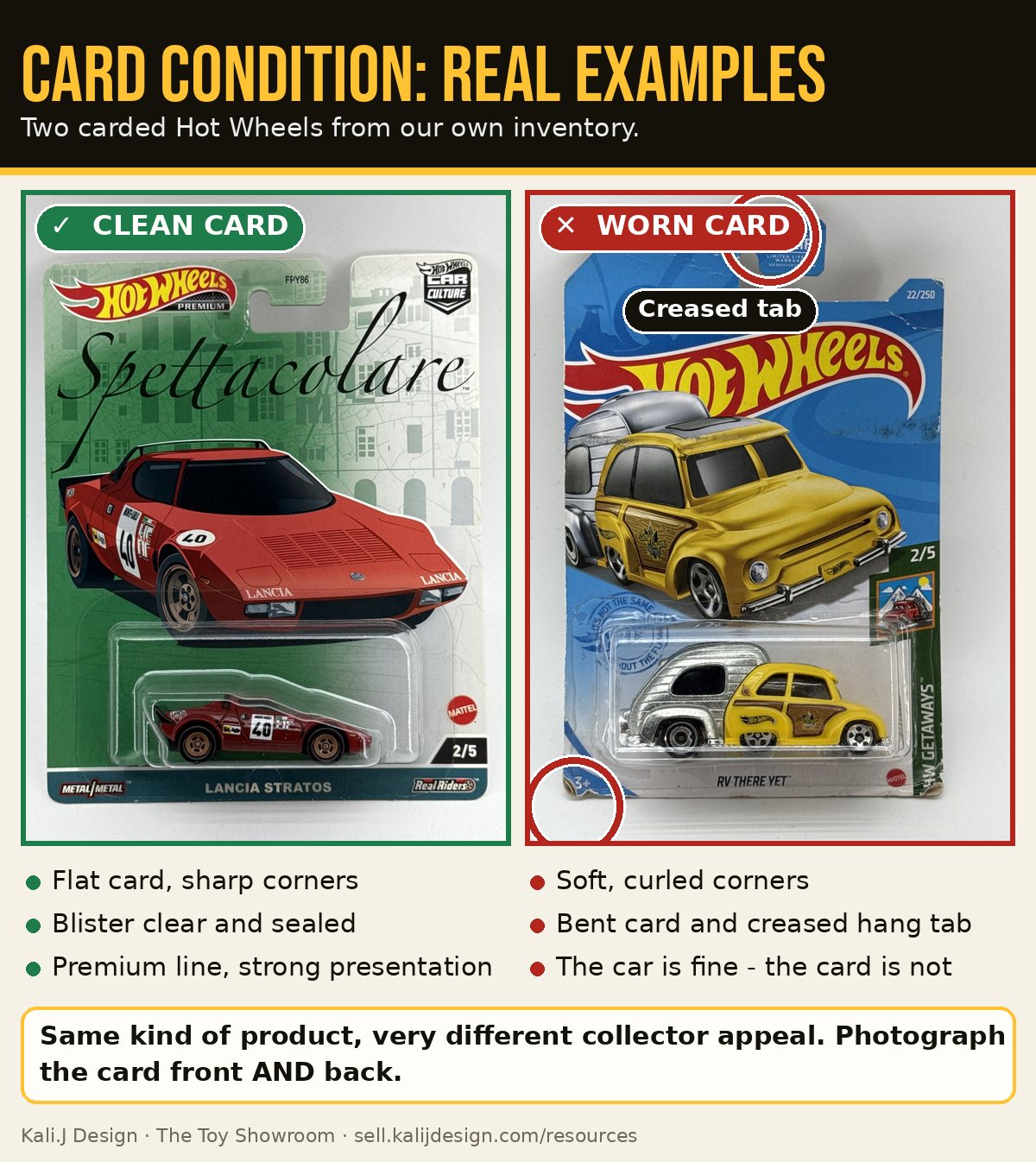
Card and box surface
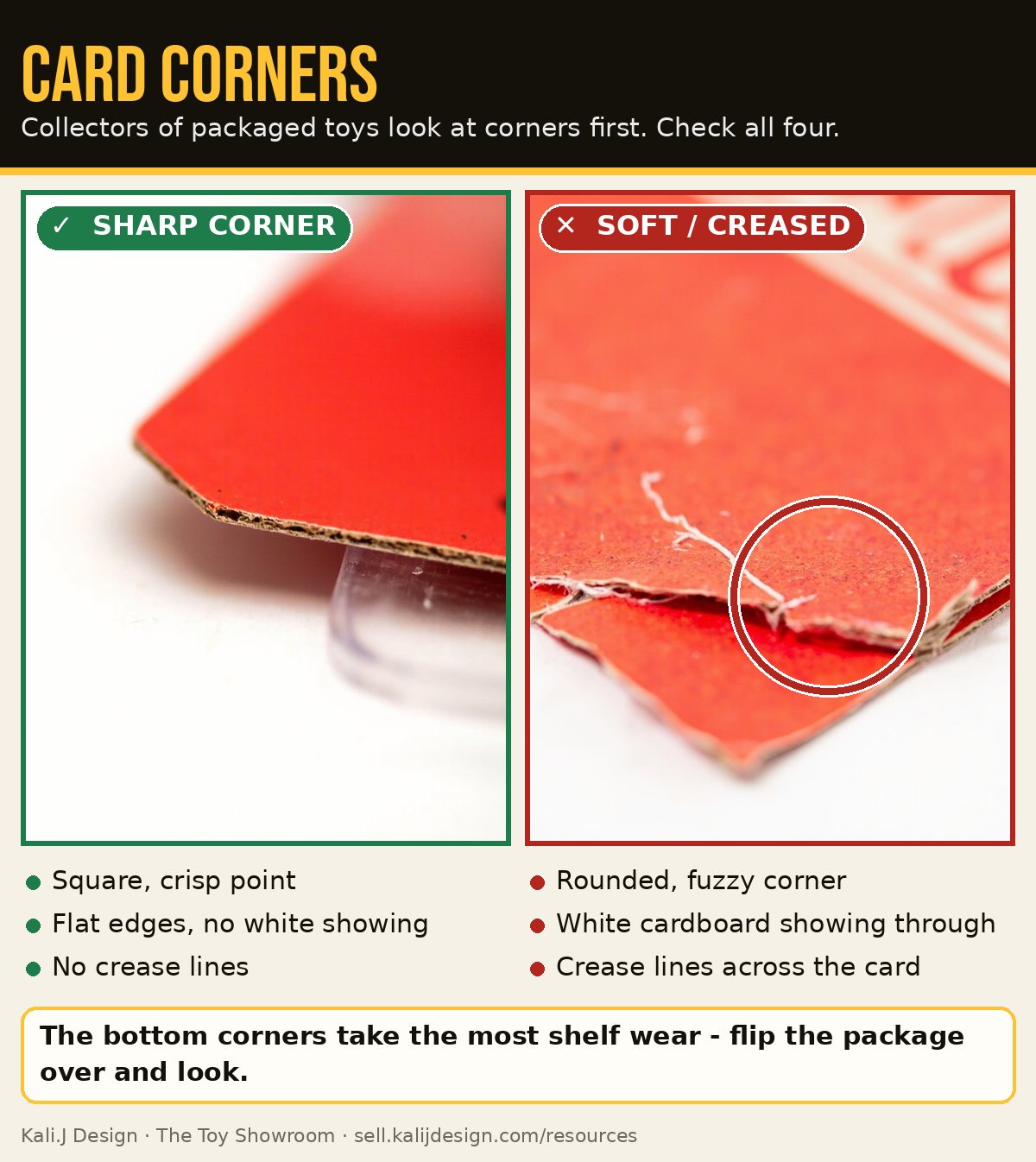
Sharp corners
- What it is
- A corner that is still square and crisp, with no rounding or exposed cardboard.
- How to spot it
- Look straight down at each corner and then from the side. White fibers or a rounded tip mean wear.
- Why it matters
- Sharp corners are what "clean" looks like to a packaging collector - they are the baseline everyone compares against.
- What to photograph
- A close-up of the corners, especially the two bottom corners.
- When it becomes serious
- It is a positive - but note it only if it is true on all four corners.
Soft corners
- What it is
- Corners that have been rounded or blunted by handling or shelf rubbing.
- How to spot it
- The tip looks fuzzy or rounded and the print is rubbed thin.
- Why it matters
- The most common packaging wear. On its own it is minor, but it is the first thing a picky buyer notices.
- What to photograph
- A close-up of each affected corner.
- When it becomes serious
- When the corner is folded over, split or shows a lot of white cardboard.
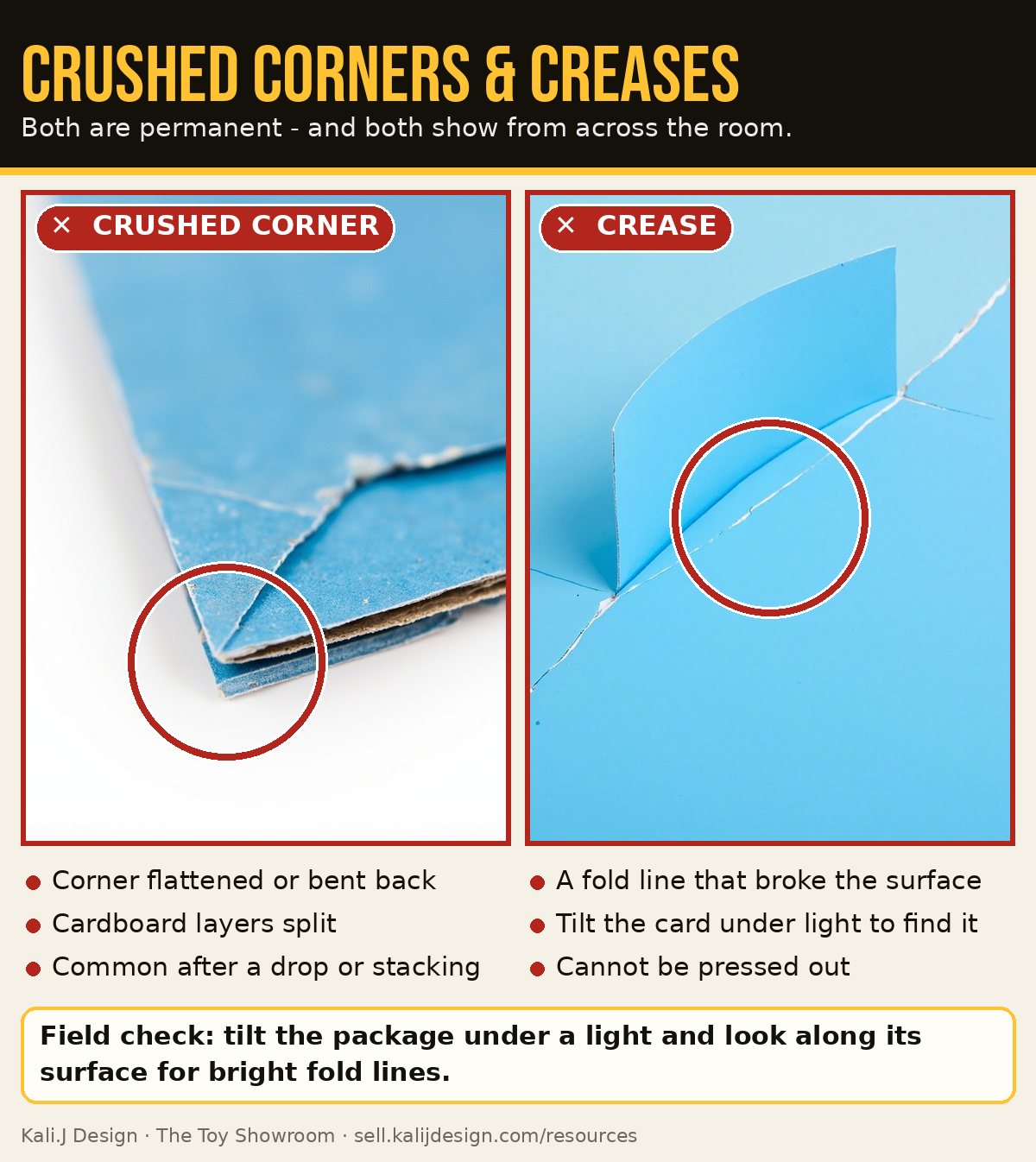
Crushed corners
- What it is
- A corner that has been flattened or pushed in, usually from being dropped or stacked.
- How to spot it
- The corner is no longer flat - it bulges, dents or folds back.
- Why it matters
- Clearly visible from across the room, so it hurts display appeal much more than softness.
- What to photograph
- The corner from the front and from the side so the depth shows.
- When it becomes serious
- Almost always a significant flaw on a sealed item.
Bends and creases
- What it is
- A bend is a curve in the card; a crease is a fold line that has broken the surface.
- How to spot it
- Tilt the package under a light. Creases show as bright or white lines, especially on glossy cards and hang tabs.
- Why it matters
- Creases are permanent. A bend can sometimes relax, but a crease cannot be undone.
- What to photograph
- Tilted so the light shows the line, plus the whole card so the location is clear.
- When it becomes serious
- When the crease runs through the art, the blister area or the full width of the card.
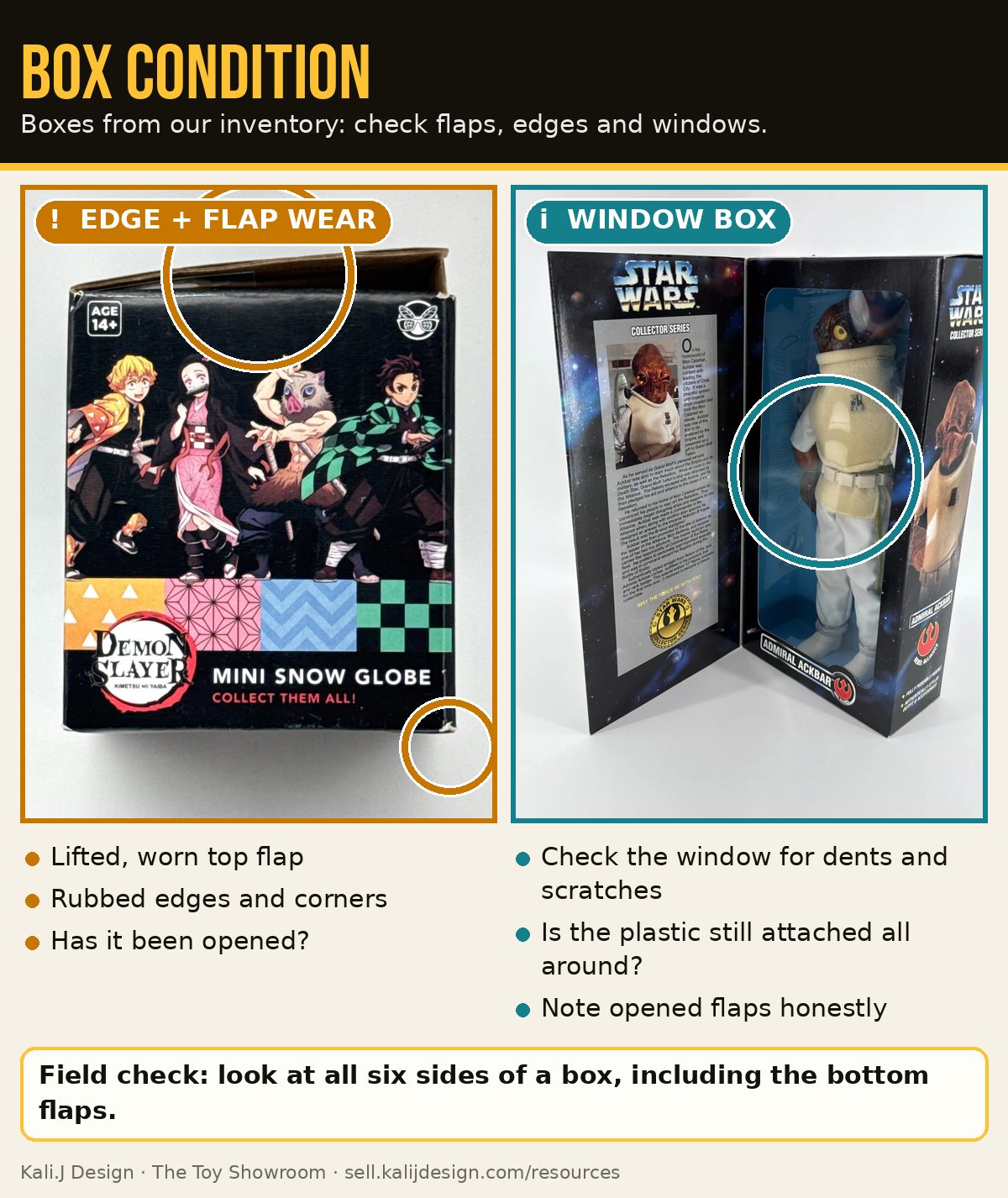
Edge wear
- What it is
- Rubbing along the edges of a card or box that removes ink.
- How to spot it
- White lines along the edges and folds of a box.
- Why it matters
- Shows the item has been handled or moved around. Light edge wear is common; heavy wear reads as "used".
- What to photograph
- The worst edge, close up.
- When it becomes serious
- When the edges are split, frayed or the box no longer holds its shape.
Tears and punched hang tabs
- What it is
- Rips in the cardboard; a hang tab that has been punched out or torn.
- How to spot it
- Check the peg hole at the top of carded items - some come with a pre-cut tab that was never punched, others are punched in store.
- Why it matters
- For some older lines, collectors care whether the tab is unpunched. A torn tab is damage either way.
- What to photograph
- The top of the card, front and back.
- When it becomes serious
- Any tear into the art or near the blister.
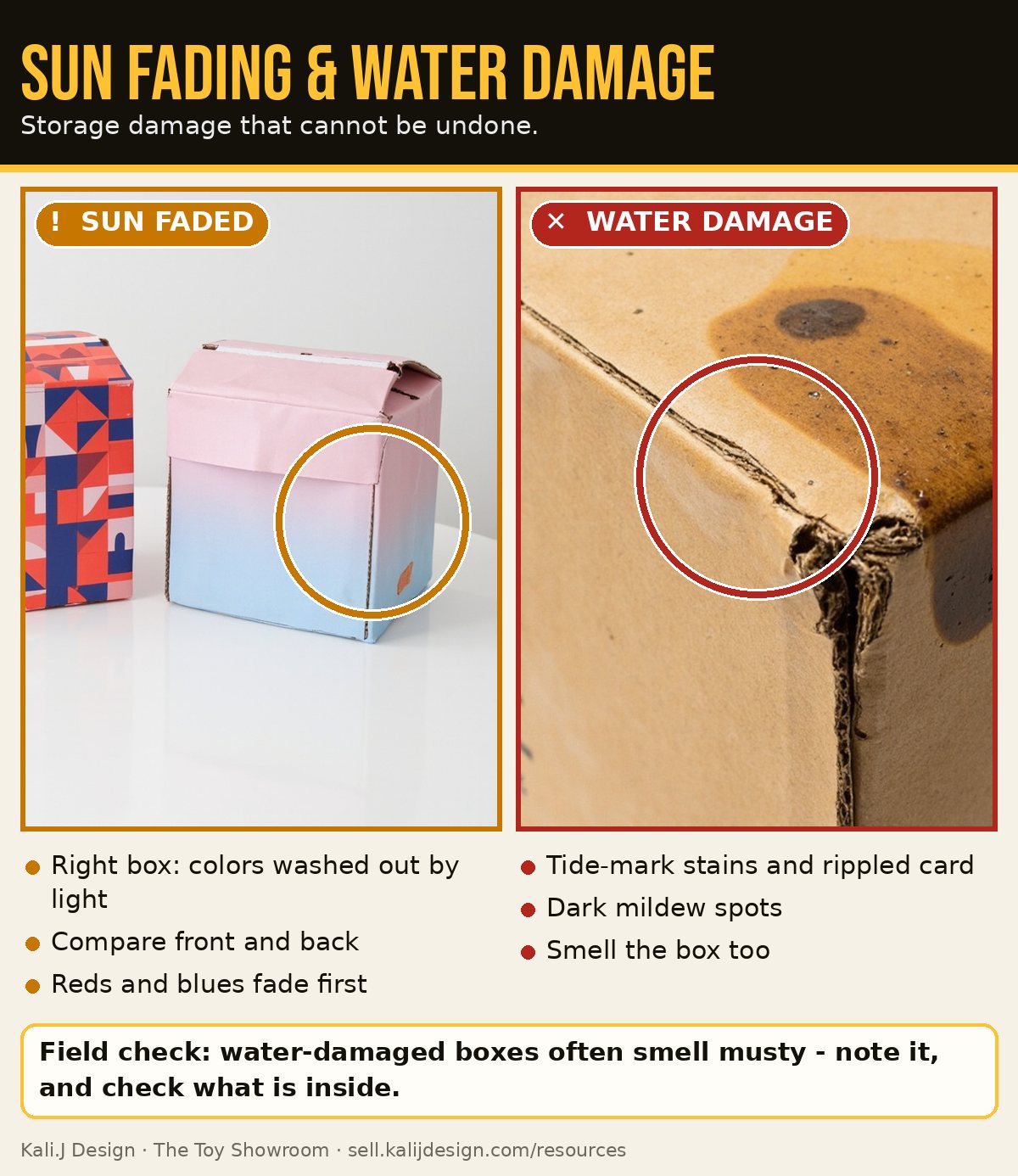
Fading and sun bleaching
- What it is
- Colors that have washed out from light exposure.
- How to spot it
- Compare the front with the back or a protected area. Reds and blues often fade first.
- Why it matters
- Fading cannot be reversed and makes the package look old and tired.
- What to photograph
- Front and back side by side in the same light.
- When it becomes serious
- When the art is visibly washed out or one side is a different color from the other.
Water damage and stains
- What it is
- Warping, rippling, tide marks, mildew spots or other stains.
- How to spot it
- Wavy cardboard, brown rings or dark speckles. Smell the box too.
- Why it matters
- Water damage suggests poor storage and can also affect what is inside.
- What to photograph
- The stain or ripple close up, plus the whole package.
- When it becomes serious
- Any mildew or musty smell, or warping that changes the shape of the package.
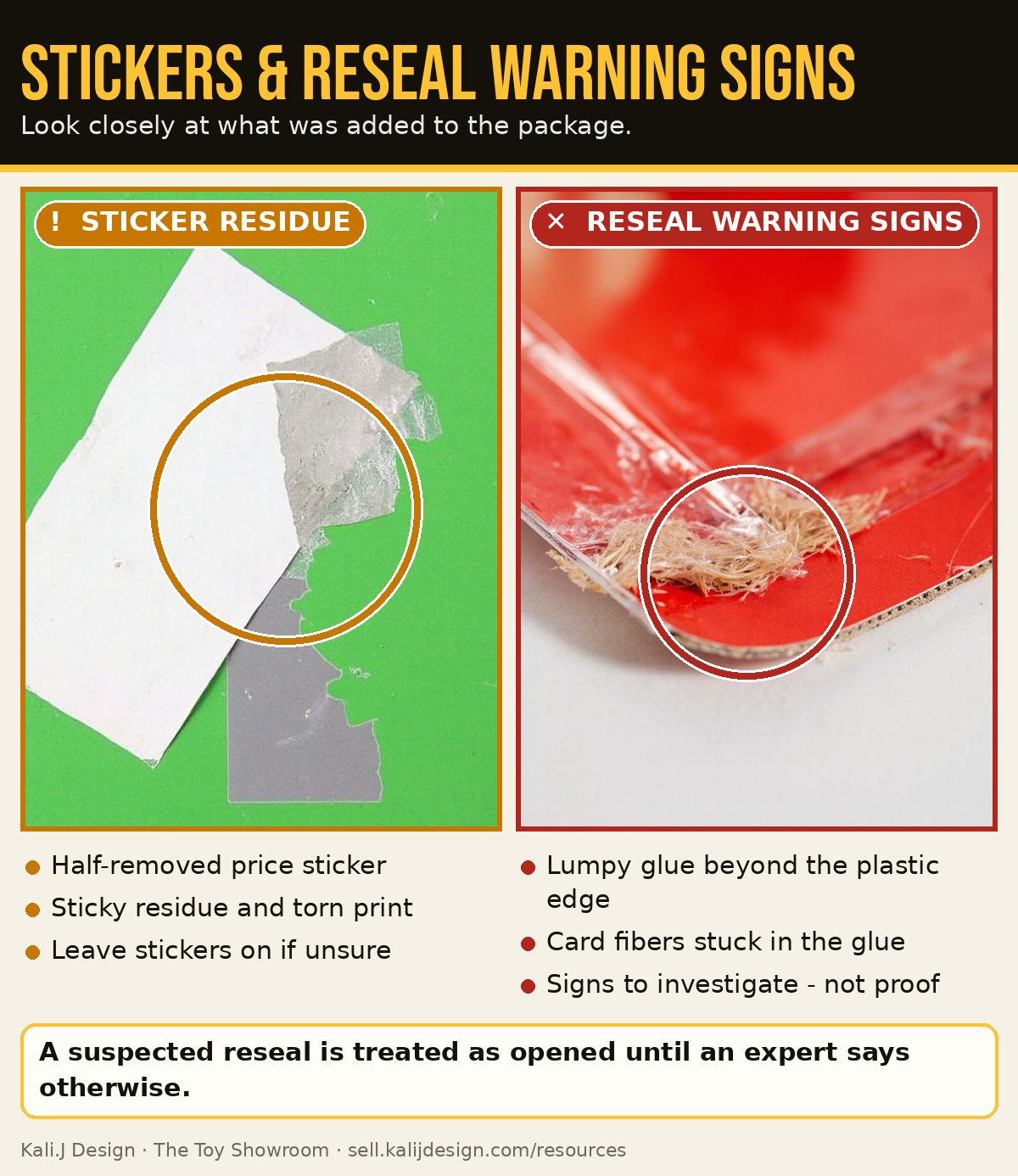
Price stickers and residue
- What it is
- Store price tags, clearance stickers, or the sticky residue left after one was removed.
- How to spot it
- Look for glossy patches, paper remnants or torn print where a sticker was.
- Why it matters
- Some collectors do not mind an original store sticker; many dislike torn print from a removal attempt.
- What to photograph
- The sticker or residue close up.
- When it becomes serious
- When removing it pulled up the printed surface of the card.
Writing
- What it is
- Pen, marker or pencil on the package - names, prices, dates.
- How to spot it
- Check the back and the bottom, where people often wrote.
- Why it matters
- Ink is permanent and very visible.
- What to photograph
- The writing, close up.
- When it becomes serious
- On the front, or in marker.
The plastic: blisters, bubbles and windows
Blister or bubble lifting (separation)
- What it is
- On carded figures and diecast, the clear plastic blister is glued to the card around a flat rim. Lifting means part of that rim has come unstuck.
- How to spot it
- Look around the entire perimeter - especially the bottom and sides. Look for: gaps between plastic and card; lifting adhesive; uneven edges; discoloration around the seal; glue residue; signs the blister may have been removed and resealed.
- Why it matters
- A buyer who wants unopened packaging needs to trust that the item was never taken out. Even a small lift raises that question.
- What to photograph
- Tilt the package so the gap shows, and photograph each lifted section close up plus one photo of the whole package from a low side angle.
- When it becomes serious
- When the gap is large enough to move the item, or any sign the blister was reattached.
Reseals
- What it is
- A package that was opened and glued back together to look sealed.
- How to spot it
- Collectors look for glue that looks different from the factory pattern, cloudy or heat-marked plastic, uneven blister edges and card fibers stuck to the rim. These signs suggest a reseal - they do not prove one.
- Why it matters
- A resealed package is not a sealed package. Presenting one as factory sealed is misrepresentation.
- What to photograph
- The blister edge all the way around, and the back of the card behind the blister.
- When it becomes serious
- Always. If you suspect a reseal, say so, or have it looked at by a grading service before selling it as sealed.
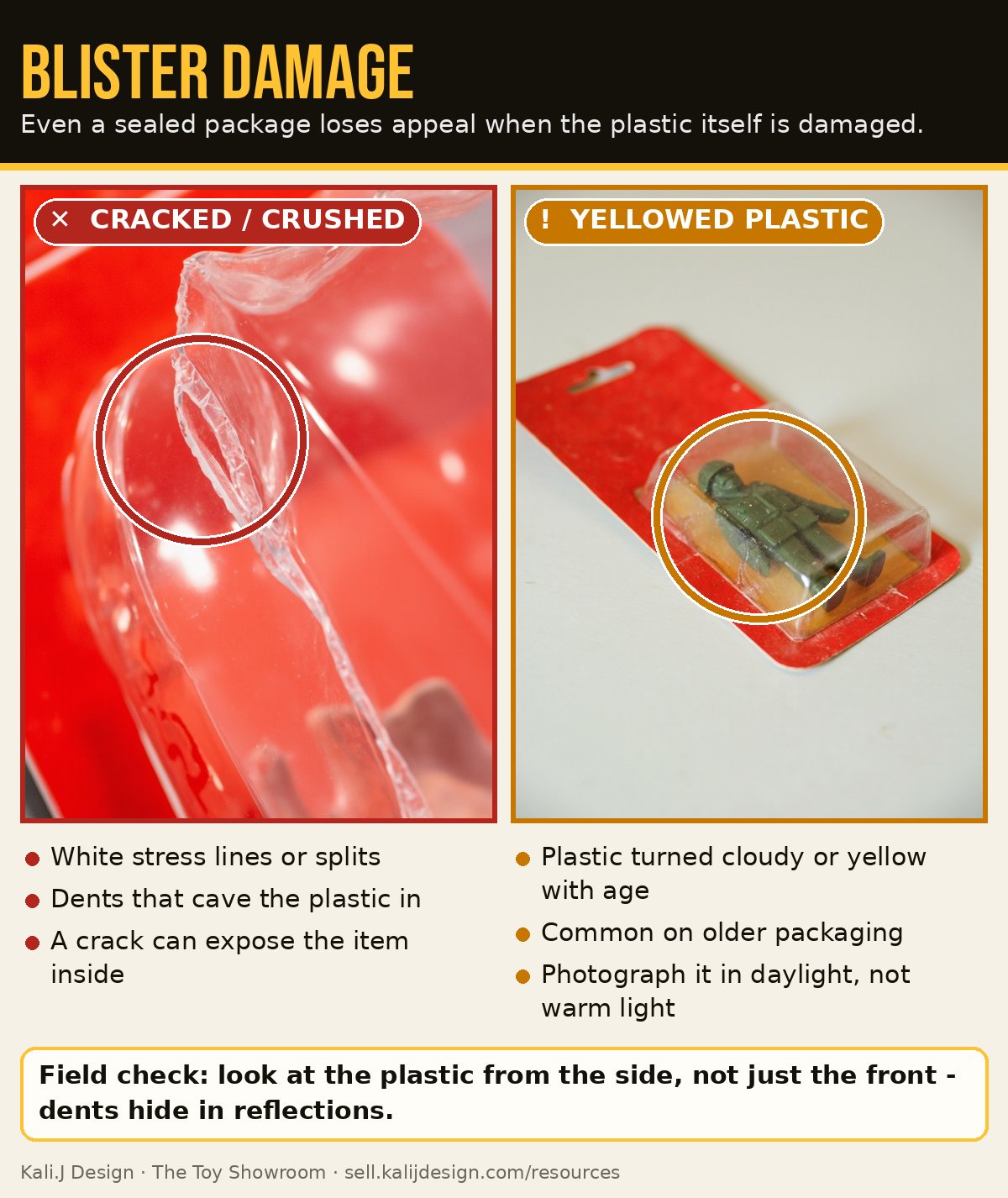
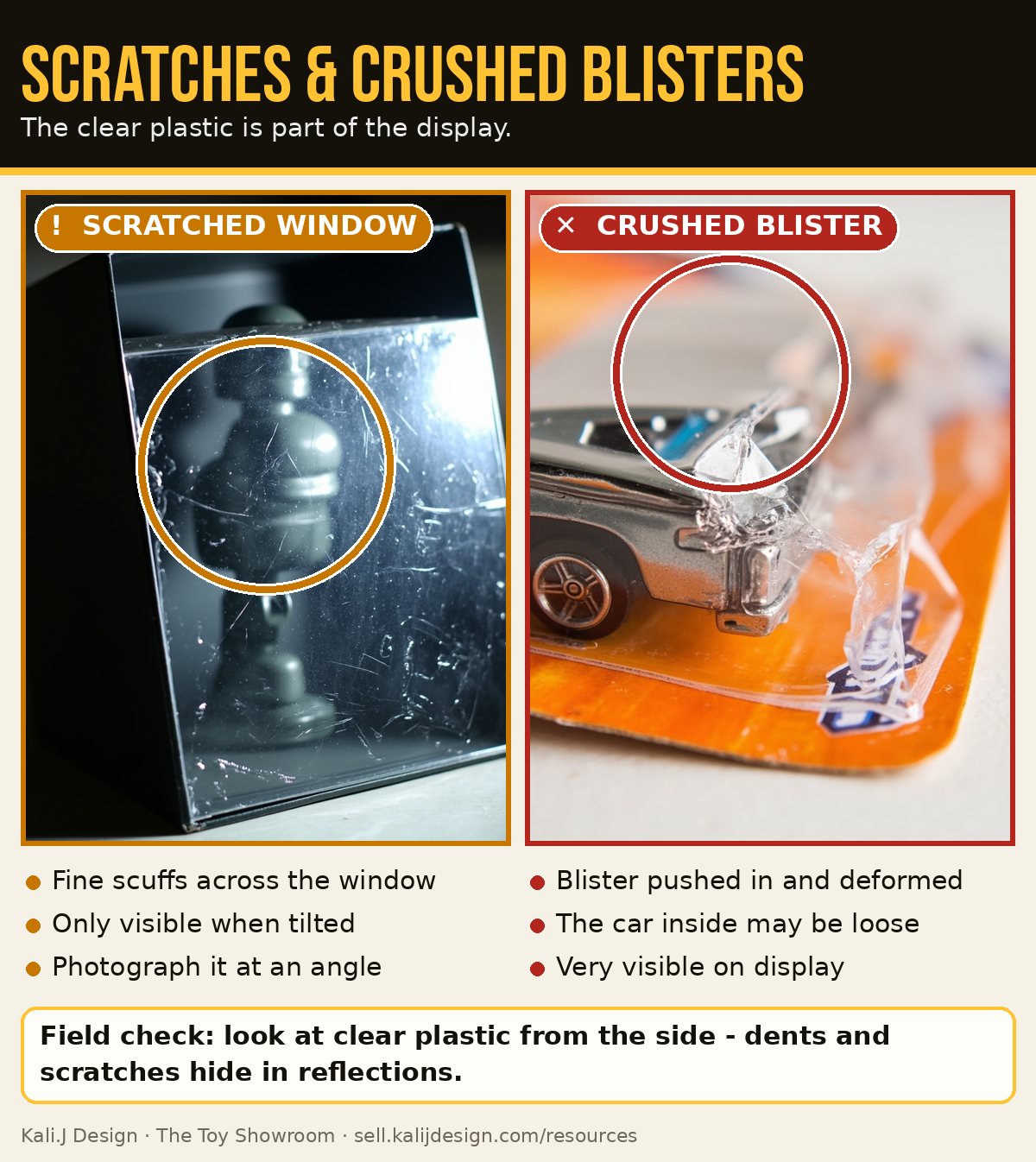
Blister cracks and dents
- What it is
- Splits, stress lines or crushed areas in the clear plastic.
- How to spot it
- Look at the plastic from the side, not straight on - dents hide in reflections. Cracks often show as white lines.
- Why it matters
- Very visible on display, and a crack can expose the item inside to dust and damage.
- What to photograph
- From an angle with light reflecting off the damage.
- When it becomes serious
- Any crack that goes through the plastic.
Blister yellowing
- What it is
- Clear plastic that has turned yellow or cloudy with age.
- How to spot it
- Compare with a white background. Warm indoor light can hide yellowing, so check in daylight.
- Why it matters
- Common on older packaging and often expected, but clear plastic is preferred. Collector Archive Services even marks yellowing with its own grading qualifier.
- What to photograph
- In daylight against white.
- When it becomes serious
- When the plastic is so yellow or cloudy that the item is hard to see.
Window scratches, dents and separation
- What it is
- On window boxes, the clear film can scuff, dent or come unglued from the box.
- How to spot it
- Tilt the box under light, and press gently near the window edge to see if it is still attached.
- Why it matters
- The window is how a boxed item is displayed, so damage is front and center.
- What to photograph
- The window tilted to show scratches, plus any loose edge.
- When it becomes serious
- A torn window or one that has fully separated.
Boxes, seals and what should be inside
Crushed boxes
- What it is
- Boxes that have been pressed in, usually from stacking.
- How to spot it
- Dented panels, bowed sides, corners that no longer meet squarely.
- Why it matters
- Crushing is visible from every angle and can damage what is inside.
- What to photograph
- Each crushed side, plus the box from above.
- When it becomes serious
- When a panel is split or the box will not stand square.
Seals, tape and opened flaps
- What it is
- Factory tape, shrink wrap or tabs that show whether a box was opened.
- How to spot it
- Look for cut or retaped tape, tucked flaps that have been bent, or loose shrink wrap.
- Why it matters
- "Sealed" and "opened but complete" are different conditions and should be described differently.
- What to photograph
- Every flap and seal.
- When it becomes serious
- When the box is described as sealed but the seals are broken.
Missing inserts
- What it is
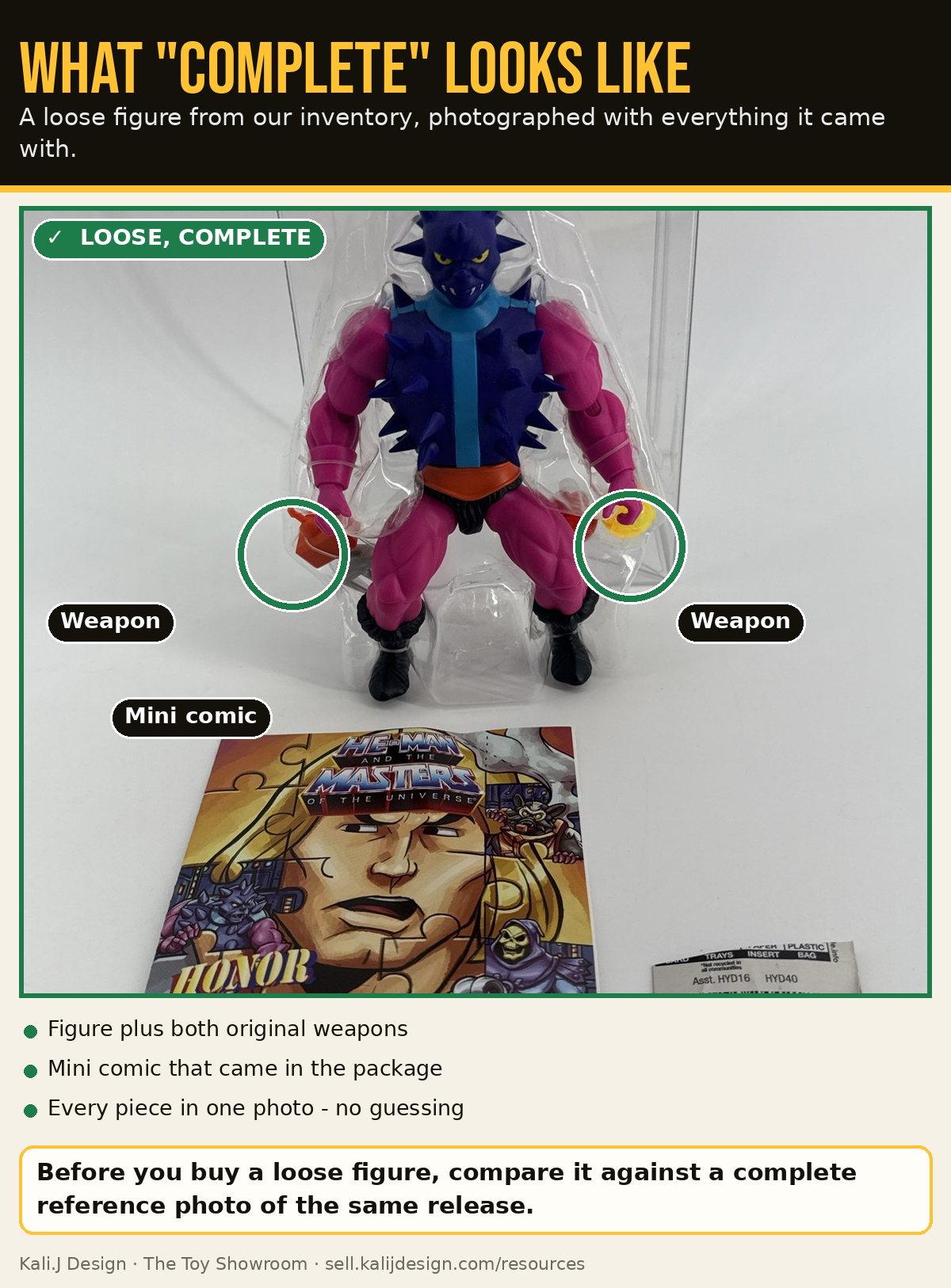
- Plastic trays, cardboard inserts, instructions, comics, stickers, cards or bags that came in the box.
- How to spot it
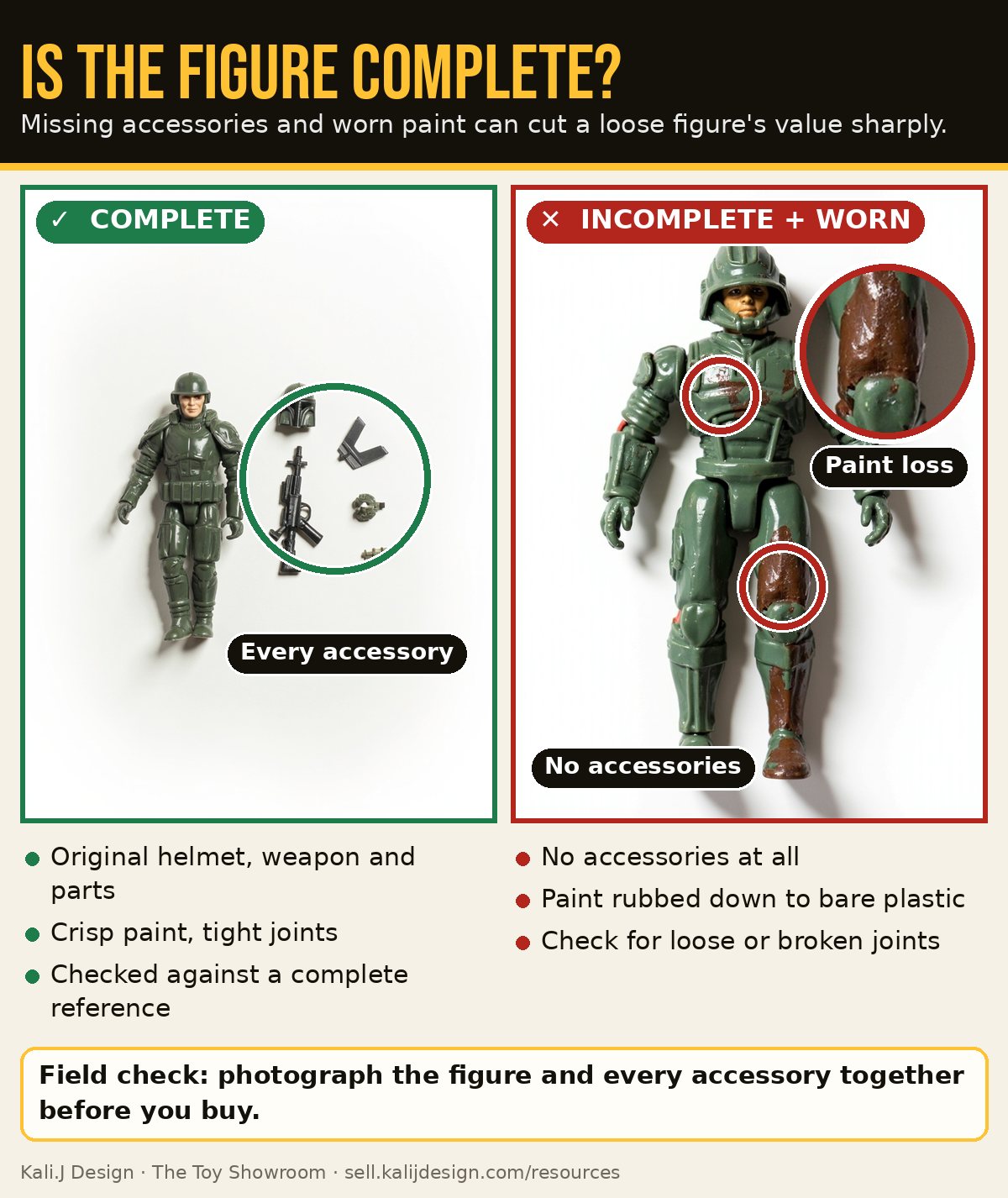
- Compare against a complete reference photo of the same release.
- Why it matters
- For boxed and "complete in box" items, missing paper and trays count as incomplete.
- What to photograph
- Everything laid out next to the box.
- When it becomes serious
- When a required part - instructions, a key accessory - is missing.
How can I tell if a blister has been resealed?
There is no single test you can do in a parking lot. Look at the glue line all the way around, compare it with photos of known factory-sealed examples of the same line, and look for heat marks, cloudy plastic, card fibers stuck to the plastic or a blister that sits slightly crooked. If a sealed item is valuable and something looks off, treat it as opened until a grading service or experienced collector says otherwise.
Common packaging mistakes
- Photographing only the frontLifts, creases and stickers are usually on the back, bottom and sides.
- Calling a loose-blister package "sealed"Describe the lift. "Sealed with a lifted bottom edge" is honest and still useful.
- Trying to re-glue a lifting blisterThat turns a flaw into a reseal. Leave it as is and disclose it.
- Peeling off stickersRemoval often tears the print. Leave stickers on unless they come off cleanly.
Related guides

Found one?
Seller Network members can snap a photo and ask the Sourcing Copilot. Anyone can send photos for an official quote based on real sold prices.
Looking to buy instead? Shop action figures at The Toy Showroom · Shop diecast at The Toy Showroom