Why condition changes what an item is worth
Two copies of the same toy can sell for very different amounts. Collectors who buy sealed packaging are paying for the packaging as much as the toy, so a crushed corner or a lifted bubble can knock a sealed item down toward the price of an opened one. Buyers of loose items pay for completeness and play wear, so a missing weapon or a loose joint can matter more than a scuff.
Condition also decides how fast something sells. Clean, well-photographed, honestly described items sell sooner, and anything that sits on a shelf costs money to hold. That is why we ask for clear condition photos before we make an offer.
The five things to inspect on almost anything
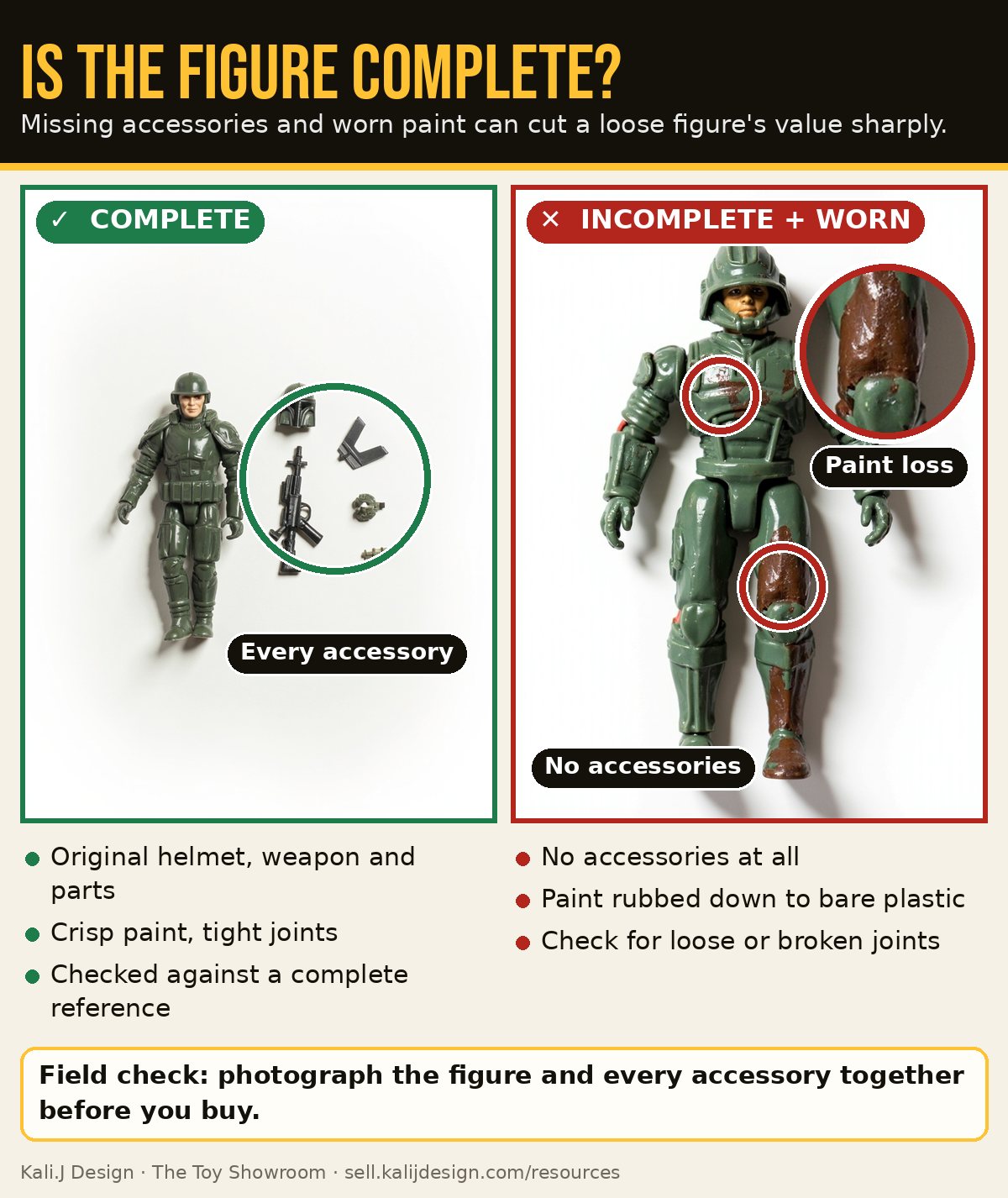
- Completeness. Is everything that originally came with it still there - accessories, inserts, manuals, tags, boxes? Compare against a complete reference photo of the same release.
- Surface. Look for paint rub, scratches, stains, fading, sun damage and writing. Use daylight or a bright white light, and tilt the item so scratches catch the light.
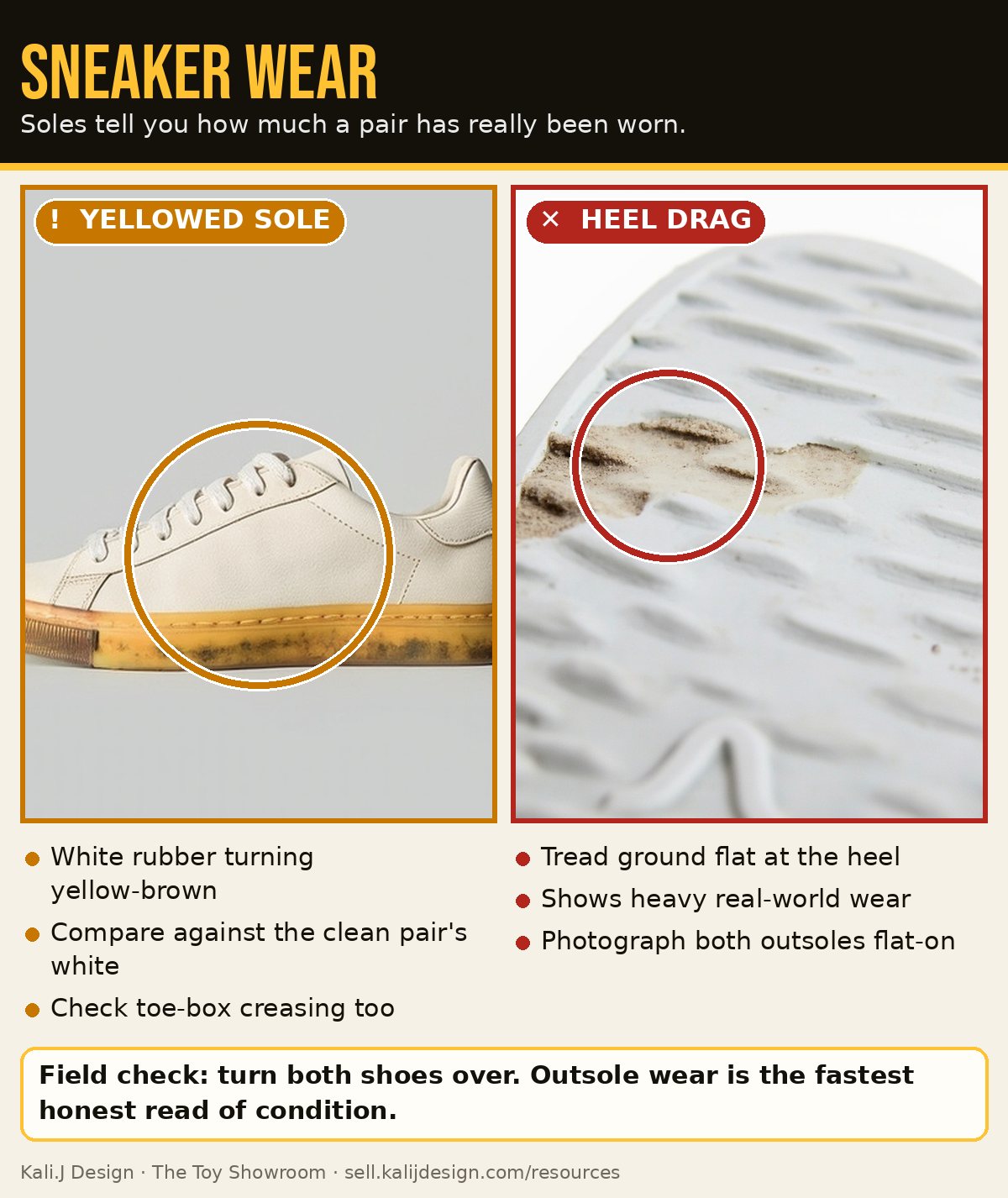
- Structure. Check joints, hinges, wheels, seams and soles. Things that are loose, cracked or separating tend to get worse.
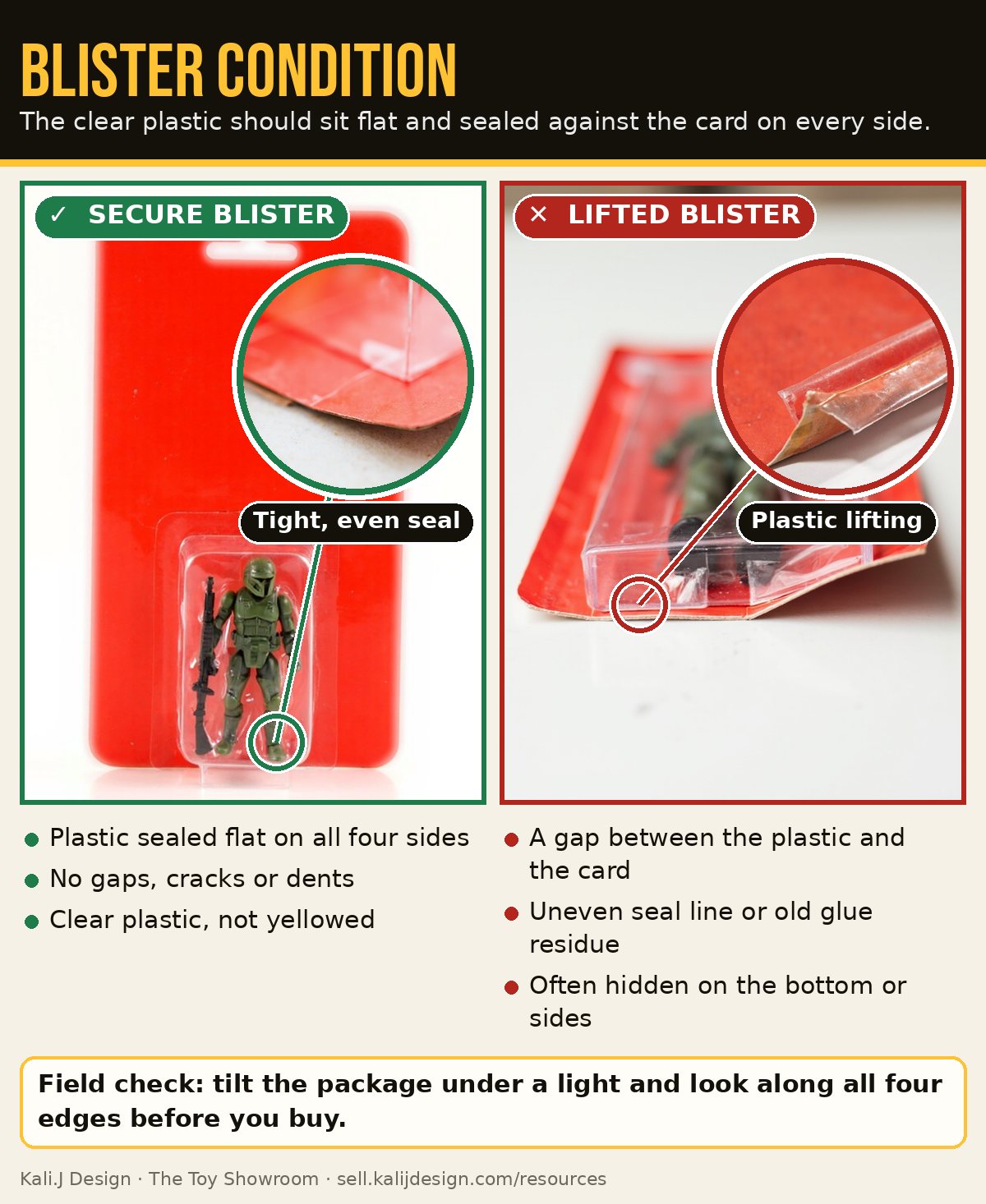
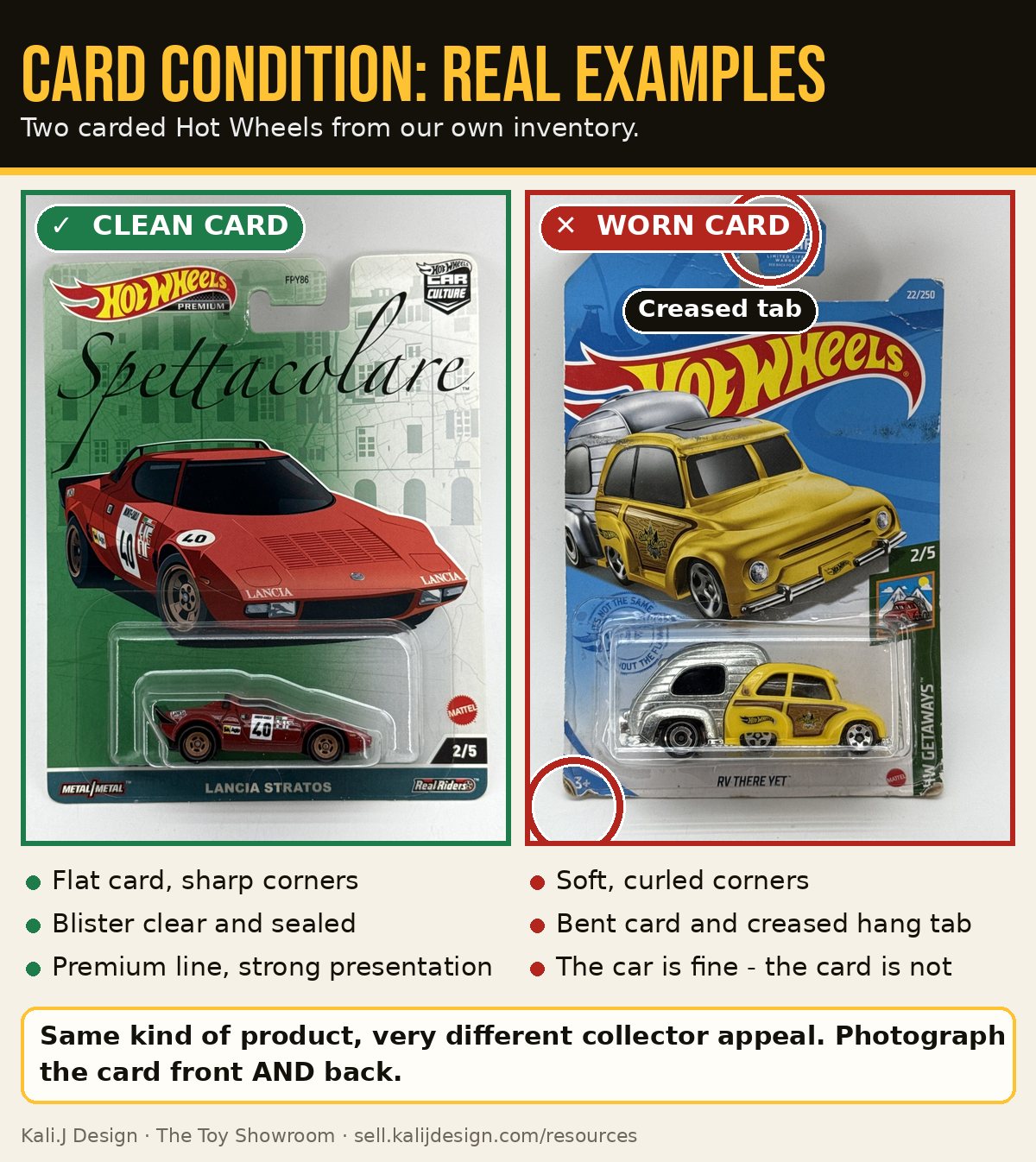
- Packaging. Corners, edges, creases, the plastic window or blister, seals, price stickers and tears. Look at all sides, including the bottom.
- Function and odor. Does it work? Was it actually tested? Smoke, mildew and storage smells are real condition issues - note them honestly when you notice them.
Condition guides by category
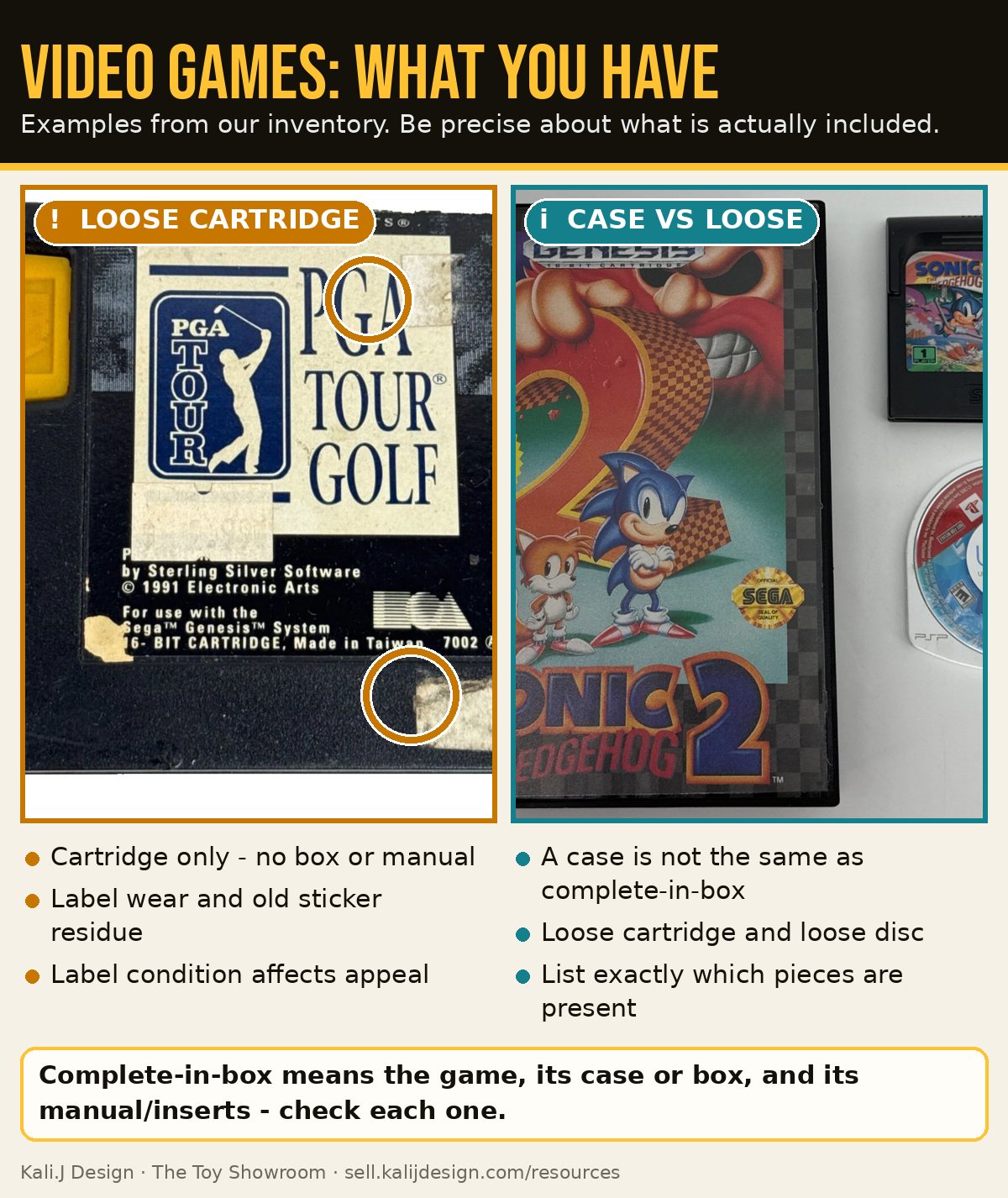
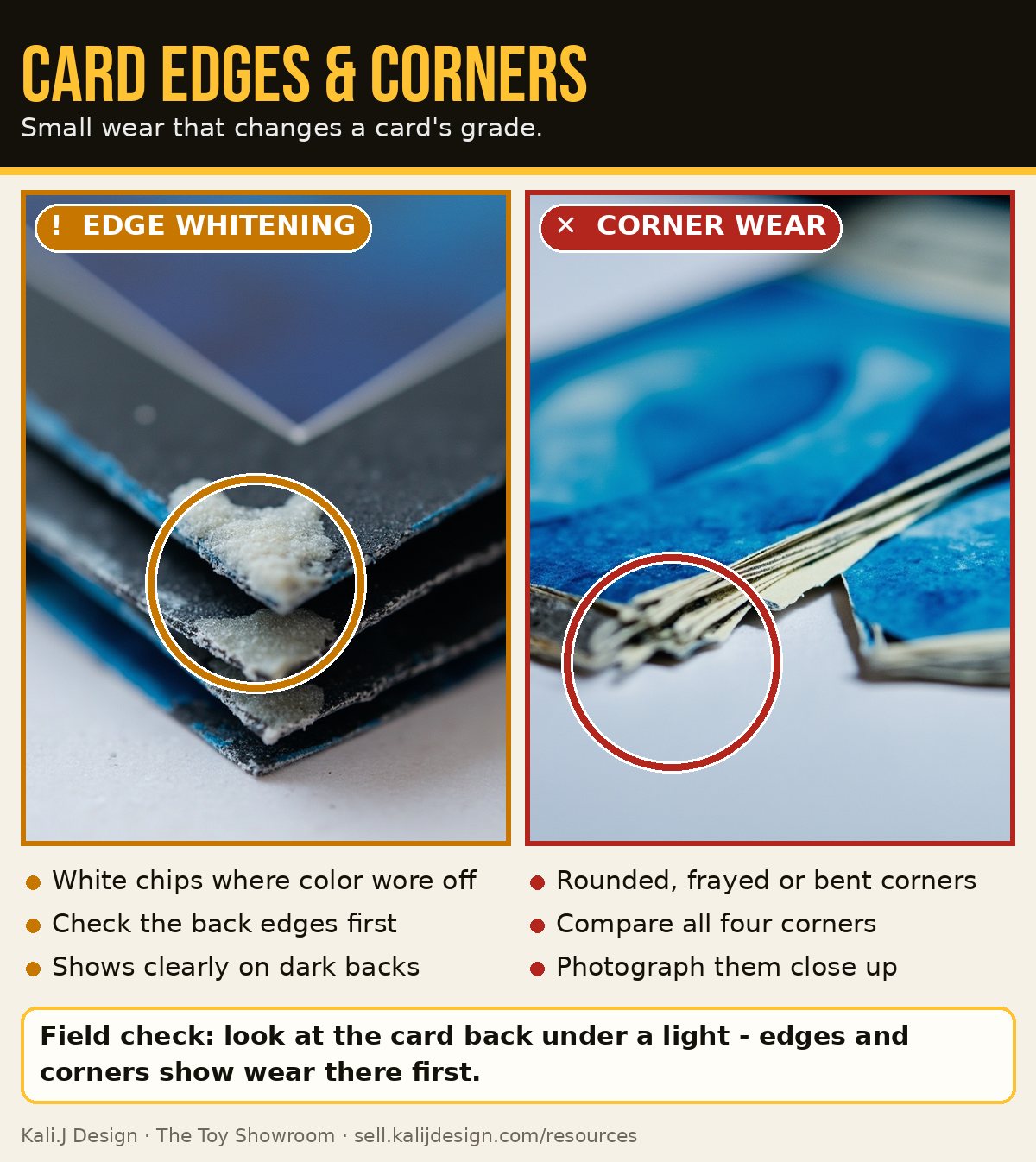
Different collectibles use different condition language. Pick the guide that matches what you have:
What photos should I take before selling a collection?
Good photos let a buyer judge condition without guessing - and let us make an offer without asking you to come back. For each item:
- One clear front photo with the whole item in frame.
- The back, including card backs and box backs - they often carry the release details.
- Close-ups of every flaw you noticed: corners, seams, chips, holes, stains.
- Identifying marks: model or style numbers, size tags, copyright stamps, labels.
- Everything that comes with it laid out together in one photo.
- For groups, one overview photo first, then items in small batches.
Common condition mistakes
- Only photographing the frontMost package damage and wear lives on the back, bottom and edges.
- Calling something "mint"Few used items are. Describe what you see - "sealed, one soft corner" is more useful than "mint".
- Saying "works great" without testingIf you did not test it, say untested. Buyers and we both price that in fairly.
- Cleaning aggressively before sellingHarsh cleaners can remove paint, fade printing or cloud plastic. When in doubt, leave it.
- Forgetting smellSmoke and storage odors are a real condition issue for clothing, plush and boxed items.
Keep learning

Found something?
Send us clear photos for a quote. Our offers are based on real sold prices, not asking prices. Local to Upland, CA - or ship it in.