The short answerFor a loose figure, completeness usually matters most: the original weapons, helmets, stands and other parts it came with. After that, check paint wear, joints, discoloration and signs of repair. Compare it against a complete reference photo of the exact same release before you buy.
How do I check whether a loose figure is complete?
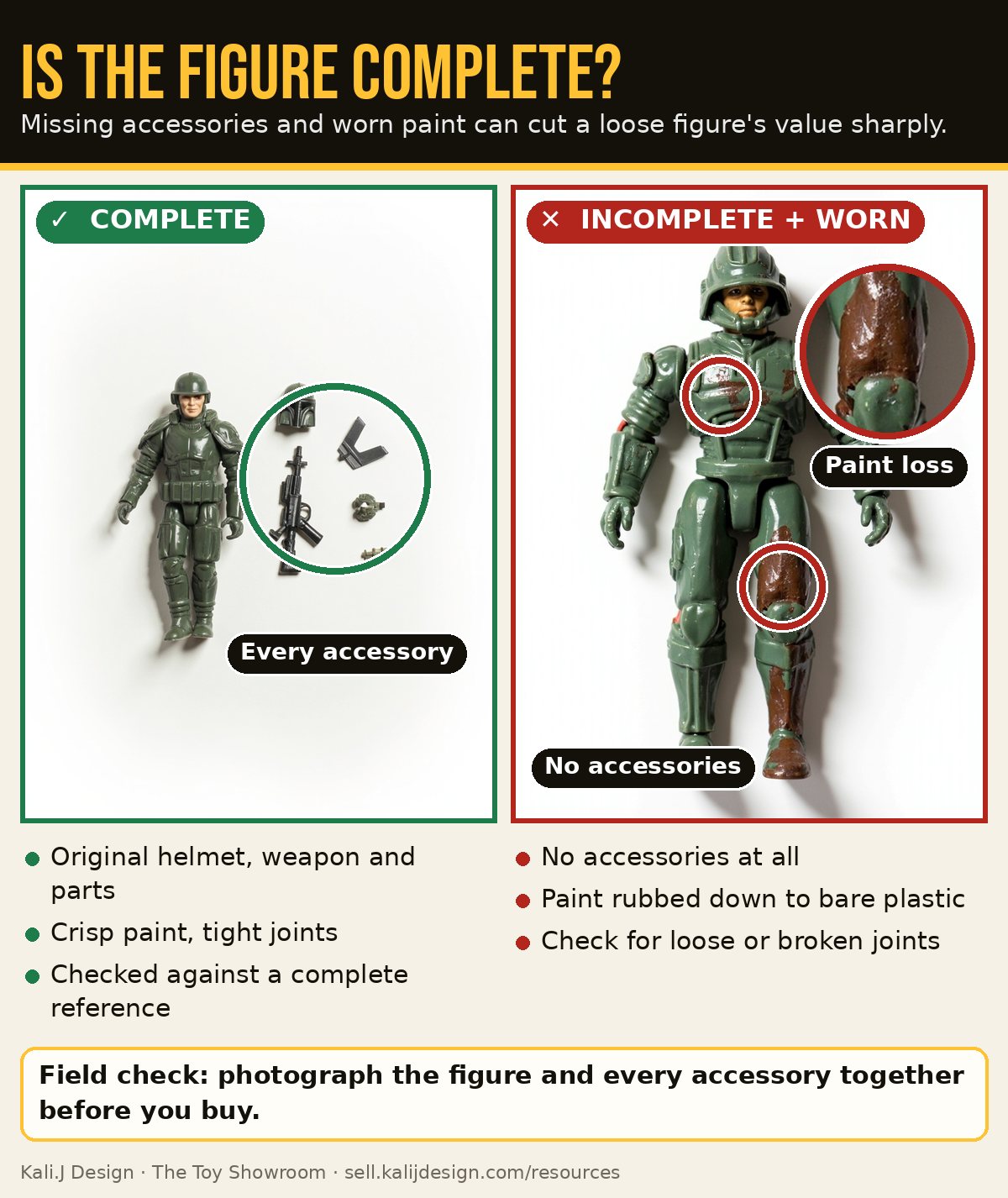
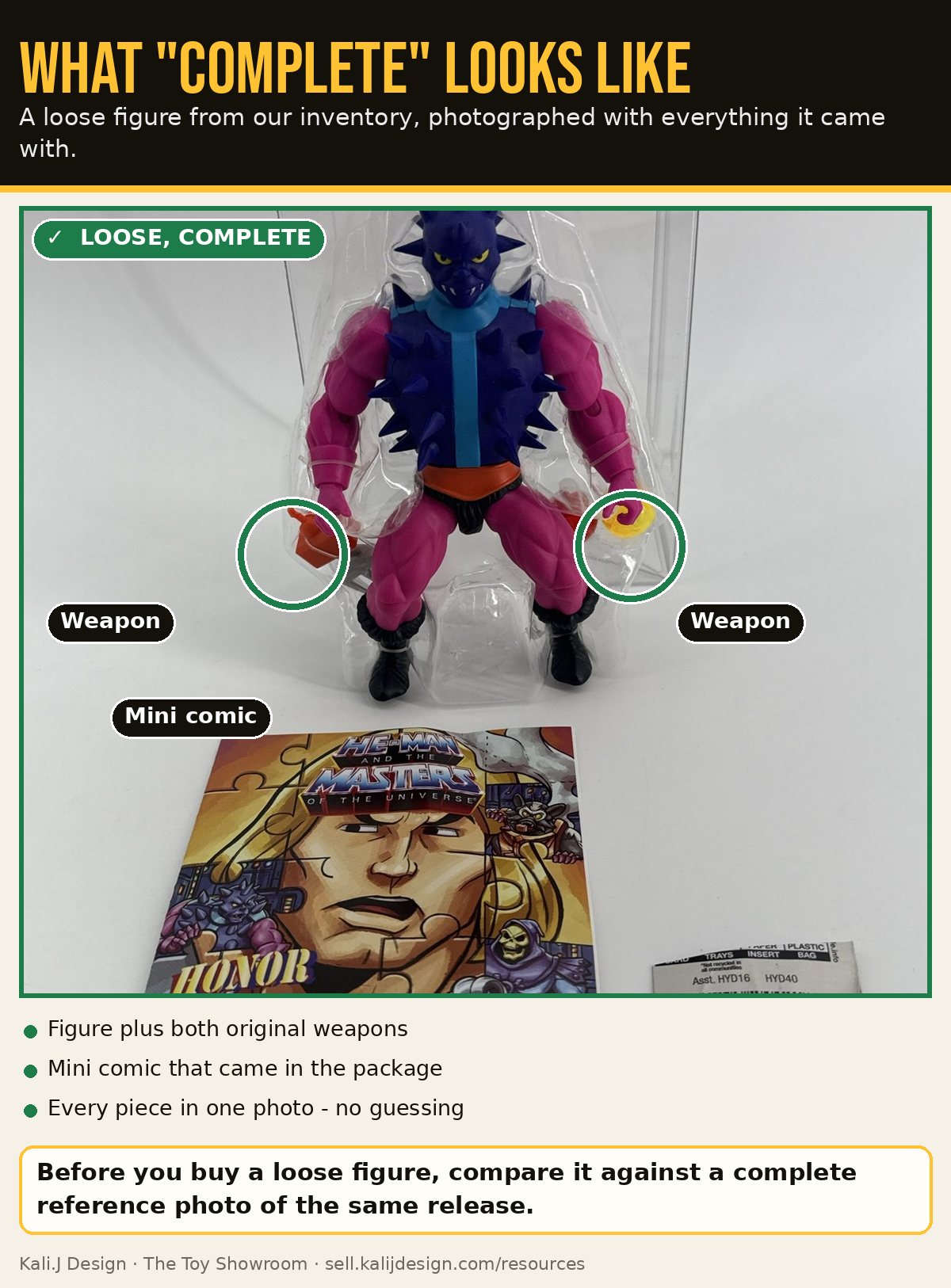
Find a reference photo of the same figure from the same release - collector archives, manufacturer pages and completed sales listings are all useful - and check it piece by piece. Many figures were sold with small accessories that are easy to lose: weapons, helmets, capes, backpacks, stands, and packed-in comics or cards. A figure that looks great can still be worth much less without them.
Original accessories
- What it is
- The parts that came with the figure when it was sold.
- How to spot it
- Match each part against the reference: shape, color and size. Many lines reuse similar parts in different colors.
- Why it matters
- Completeness is often the biggest single value factor for loose figures.
- What to photograph
- The figure and every accessory together, then close-ups of any small parts.
- When it becomes serious
- When a signature accessory is missing - the one that makes the figure recognizable.
Replacement and reproduction accessories
- What it is
- Parts that were not originally issued with the figure: parts from another figure, or newly made reproductions.
- How to spot it
- Differences in color, plastic sheen, sharpness of detail or size compared with the reference. For vintage Star Wars, collector references such as The Imperial Gunnery note that reproductions have become harder to detect.
- Why it matters
- A figure with a reproduction weapon should be described that way. Selling it as original is misrepresentation.
- What to photograph
- Each accessory close up, next to the figure.
- When it becomes serious
- When a reproduction is being presented as original.
Broken accessories
- What it is
- Snapped tips, bent weapons, torn capes.
- How to spot it
- Check thin parts: antennae, blades, gun barrels, rifle straps.
- Why it matters
- Broken accessories count as damaged, not complete.
- What to photograph
- The break, close up.
- When it becomes serious
- A key accessory that is broken beyond display.
Paint rub and paint loss
- What it is
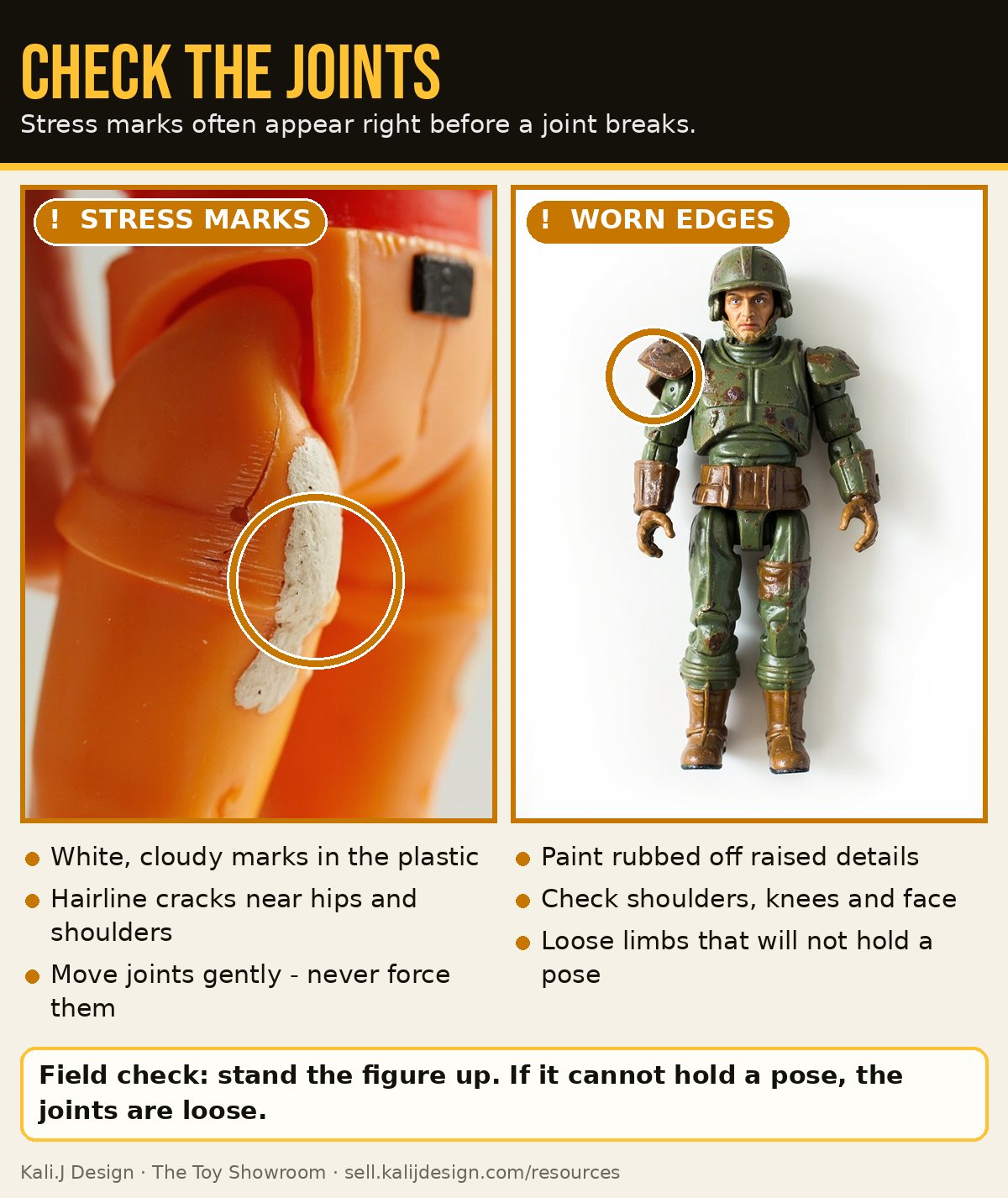
- Paint worn off raised details (rub) or areas where paint has chipped away entirely (loss).
- How to spot it
- Check high points: nose, hair, knuckles, knees, shoulder pads, logos.
- Why it matters
- Clean paint is what makes a figure look "near new". Heavy wear pushes it into "played with".
- What to photograph
- The face, chest and any worn area close up in good light.
- When it becomes serious
- When the face or a signature paint detail is worn away.
Discoloration and yellowing
- What it is
- White or light plastic that has turned yellow, or colors that have shifted from light exposure.
- How to spot it
- Compare limbs with the torso - they are often different plastics and age differently.
- Why it matters
- Mismatched color is visible on display and cannot be reversed without risk.
- What to photograph
- The whole figure in daylight.
- When it becomes serious
- Obvious mismatch between parts.
Loose joints
- What it is
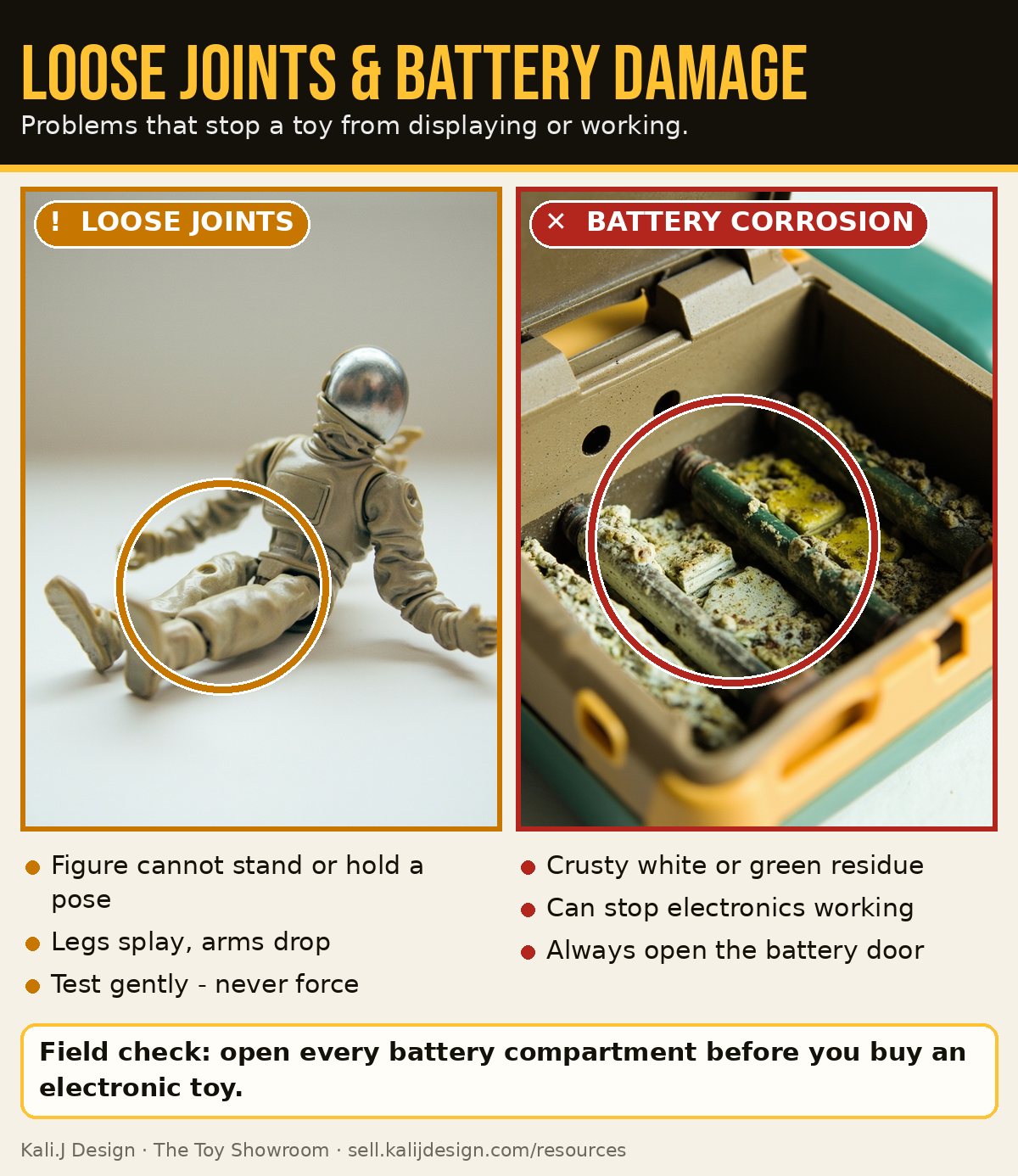
- Joints that no longer hold a pose.
- How to spot it
- Stand the figure up and pose it gently. Legs that splay and arms that drop are loose.
- Why it matters
- Collectors want figures that can be displayed.
- What to photograph
- The figure standing, if it can.
- When it becomes serious
- When it cannot stand at all.
Broken joints and stress marks
- What it is
- Cracks near hips, shoulders and knees; white stress marks in the plastic that often come before a break.
- How to spot it
- Move joints slowly and look for white clouding or hairline cracks. Never force a stiff joint.
- Why it matters
- Breaks are permanent and reduce a figure to parts value.
- What to photograph
- Each stressed or cracked joint close up.
- When it becomes serious
- Any break, and any crack that goes through a peg or post.
Corrosion and battery leakage
- What it is
- Rust on metal parts or leaked battery chemicals in electronic toys.
- How to spot it
- Open battery doors and look for white, green or crusty residue.
- Why it matters
- Leakage can stop electronics working and can keep spreading.
- What to photograph
- Inside the battery compartment.
- When it becomes serious
- Any leakage in a toy sold as working.
Missing screws and parts
- What it is
- Screws that hold a figure or vehicle together, battery doors, stickers.
- How to spot it
- Check every screw hole and compartment.
- Why it matters
- Missing hardware makes a toy incomplete even if the main pieces are there.
- What to photograph
- The back and underside.
- When it becomes serious
- When the toy does not hold together.
Restoration, repainting and modification
- What it is
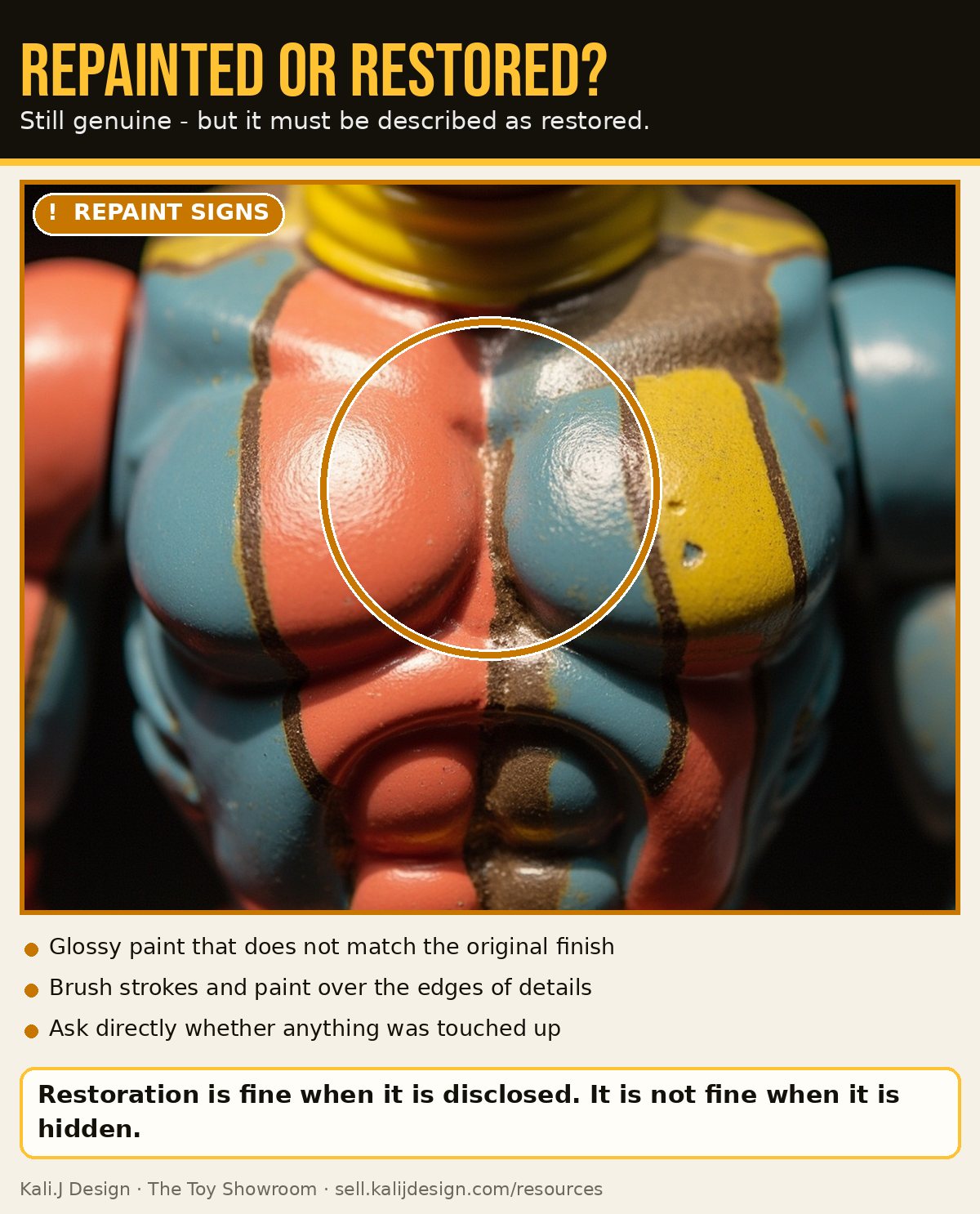
- Paint touch-ups, replaced parts, tightened joints, custom repaints or other changes after production.
- How to spot it
- Paint that looks too fresh, brush strokes, glue at joints, mismatched plastic.
- Why it matters
- Restored and modified figures can still be collectible, but they must be described as restored or modified.
- What to photograph
- Any area that looks worked on.
- When it becomes serious
- When the changes are not disclosed.
Odors
- What it is
- Smoke, mildew or storage smells.
- How to spot it
- Smell the figure and its accessories, especially soft goods.
- Why it matters
- Smell is hard to remove and matters to buyers.
- What to photograph
- Note it in writing; odors do not photograph.
- When it becomes serious
- Strong smoke or mildew.
Common mistakes with loose toys
- Mixing accessories between figuresKeep each figure with its own parts. Similar-looking pieces often belong to different releases.
- Assuming a figure is vintage because it looks oldMany lines have modern reissues and retro-styled releases. See our authenticity guide.
- Forcing stiff jointsOld plastic can snap. Warm the room, move slowly, or leave it.
- Leaving batteries in storageRemove them. Leakage is one of the most common causes of damage to electronic toys.
Related guides
Selling Action FiguresWhich action figures Kali.J Design buys - Masters of the Universe, Star Wars, Marvel, G.I. Joe, Transformers, NECA and more - plus how to identify them, condition, photos and common mistakes.
Original or Reissue? Vintage FiguresHow to tell vintage action figures from modern reissues and reproductions: manufacturer markings, copyright dates, country-of-origin marks, sculpt, paint, accessories and packaging.
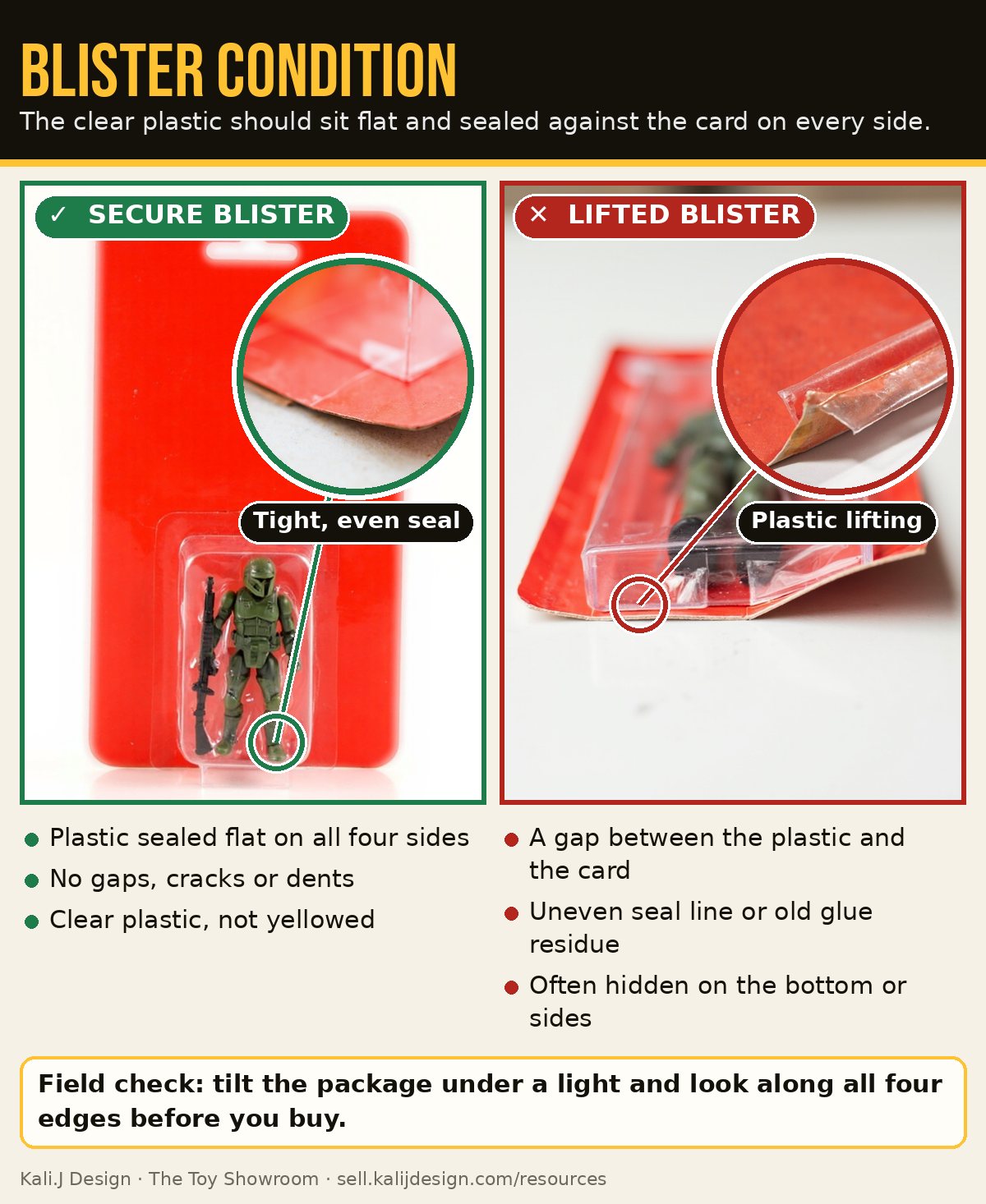
Carded & Boxed Packaging ConditionHow to inspect carded and boxed collectibles: corners, creases, blister lifting, reseals, yellowing, stickers, window boxes and missing inserts - with photos of what to look for.
Found one?
Seller Network members can snap a photo and ask the Sourcing Copilot. Anyone can send photos for an official quote based on real sold prices.
Looking to buy instead? Shop action figures at The Toy Showroom