The short answerCard condition comes down to four areas: corners, edges, surface and centering. Check the back first - wear shows there early - then tilt the front under a single light to find scratches and creases. Small flaws change a card's grade and value a lot.
Sellers and marketplaces use condition words such as Near Mint, Lightly Played, Moderately Played, Heavily Played and Damaged (TCGplayer's condition guide). Grading companies use numeric scales with their own published standards (PSA grading standards, CGC grading scale). Describe what you see; the grade is the grader's call.
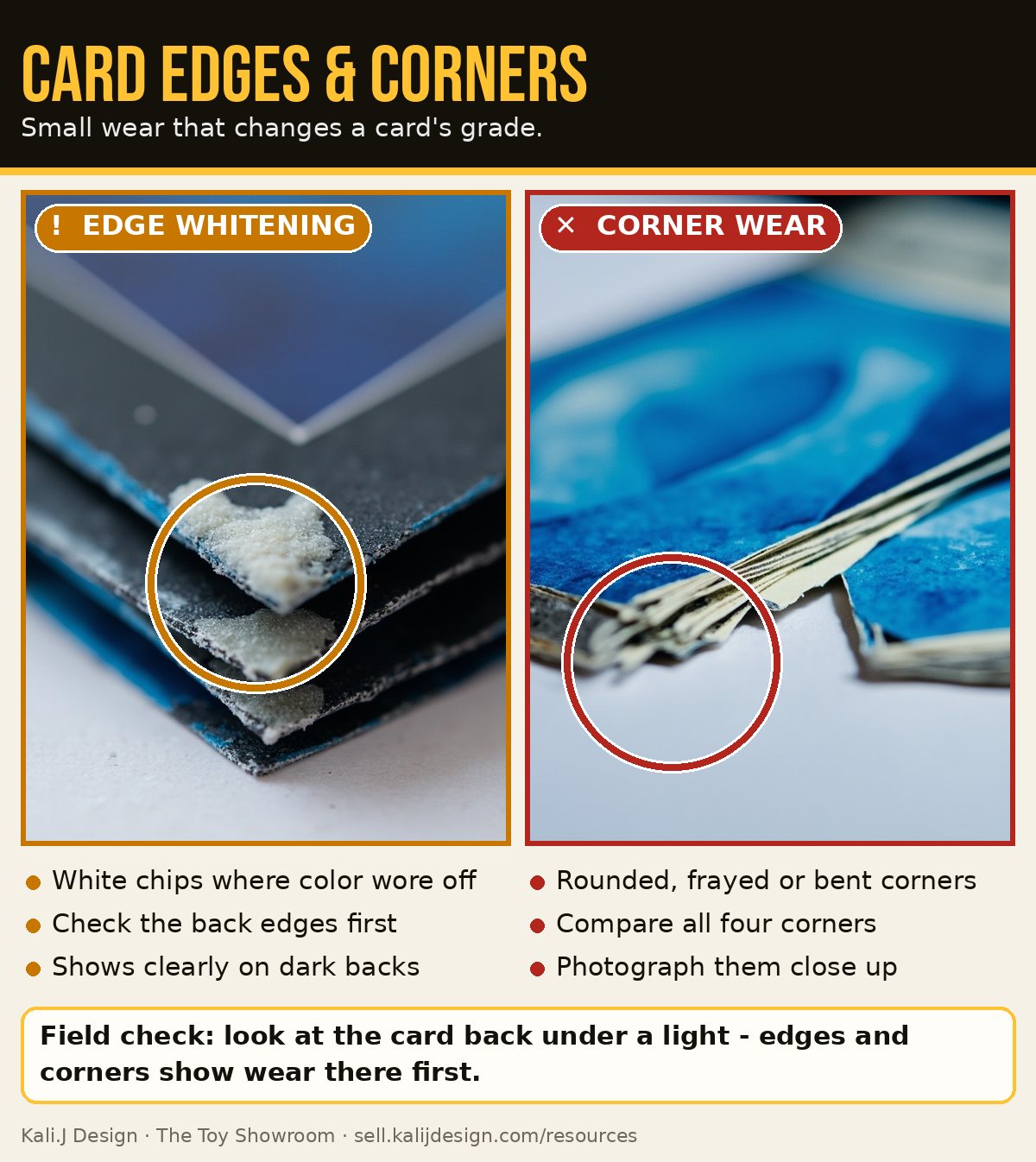
Edge whitening
- What it is
- Small white chips where the colored border has worn away.
- How to spot it
- Look along all four edges on the back under good light.
- Why it matters
- One of the most common reasons a card is not Near Mint.
- What to photograph
- The back, straight on, and the worst edge close up.
- When it becomes serious
- Whitening along long stretches of several edges.
Corner wear
- What it is
- Corners that are soft, rounded, frayed or bent.
- How to spot it
- Compare all four corners side by side.
- Why it matters
- Corners are checked first by buyers and graders.
- What to photograph
- Each corner close up.
- When it becomes serious
- Bent or folded corners.
Surface scratches
- What it is
- Fine scratches or scuffs on the card face.
- How to spot it
- Tilt the card under a single light source.
- Why it matters
- Scratches can be invisible in a flat photo but obvious in hand.
- What to photograph
- The surface at an angle so the light catches it.
- When it becomes serious
- Scratches across the artwork or name.
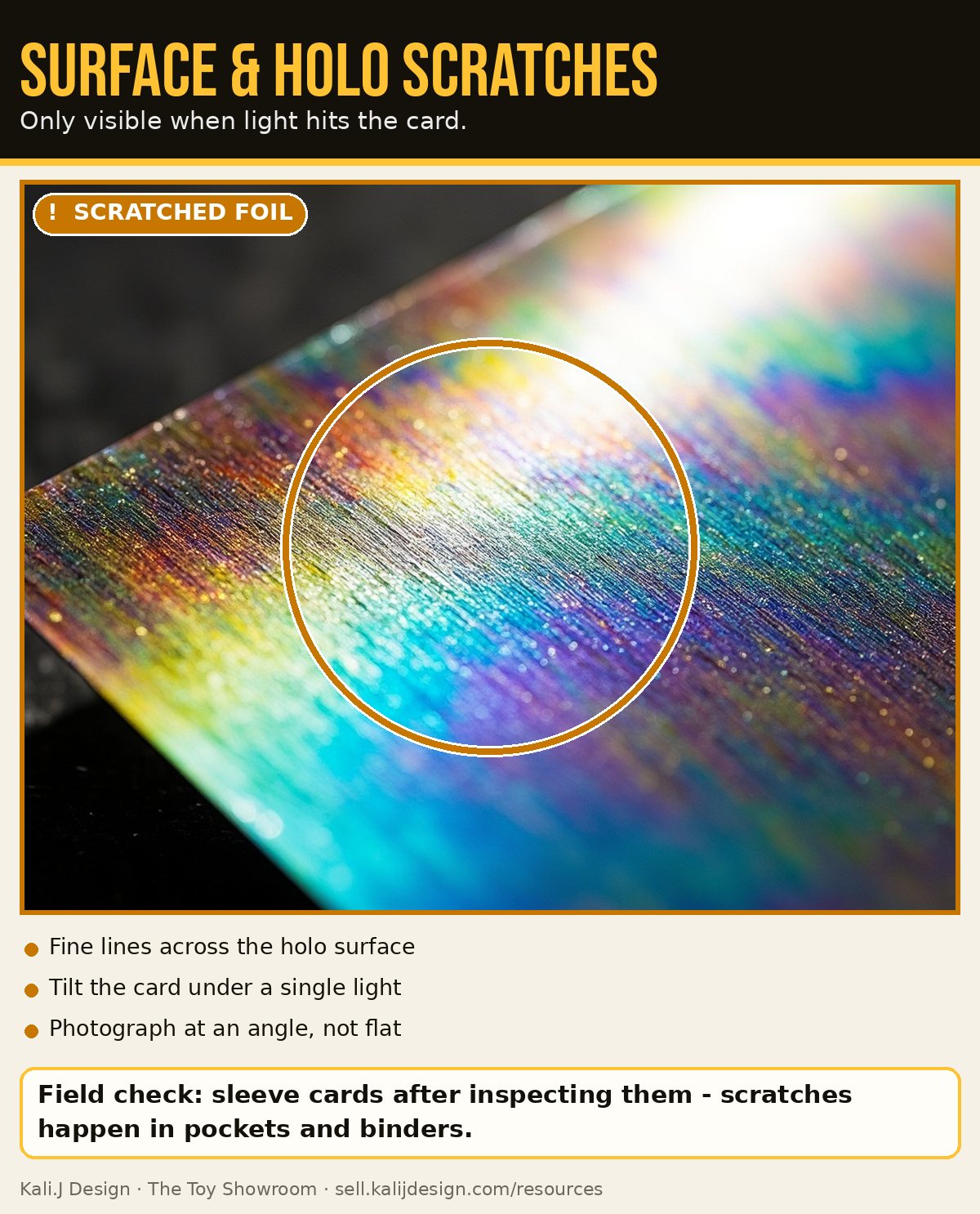
Holo scratches
- What it is
- Scratches on the foil or holographic layer.
- How to spot it
- Tilt the foil area slowly in the light.
- Why it matters
- Foil shows scratches easily and buyers look closely at it.
- What to photograph
- The holo area at two angles.
- When it becomes serious
- Deep scratches or scuffing across the whole foil.
Creases and bends
- What it is
- A fold line or a bend in the card stock.
- How to spot it
- Look along the card at eye level and tilt it under light.
- Why it matters
- Creases are permanent and cut value sharply.
- What to photograph
- The crease at an angle.
- When it becomes serious
- Any visible crease.
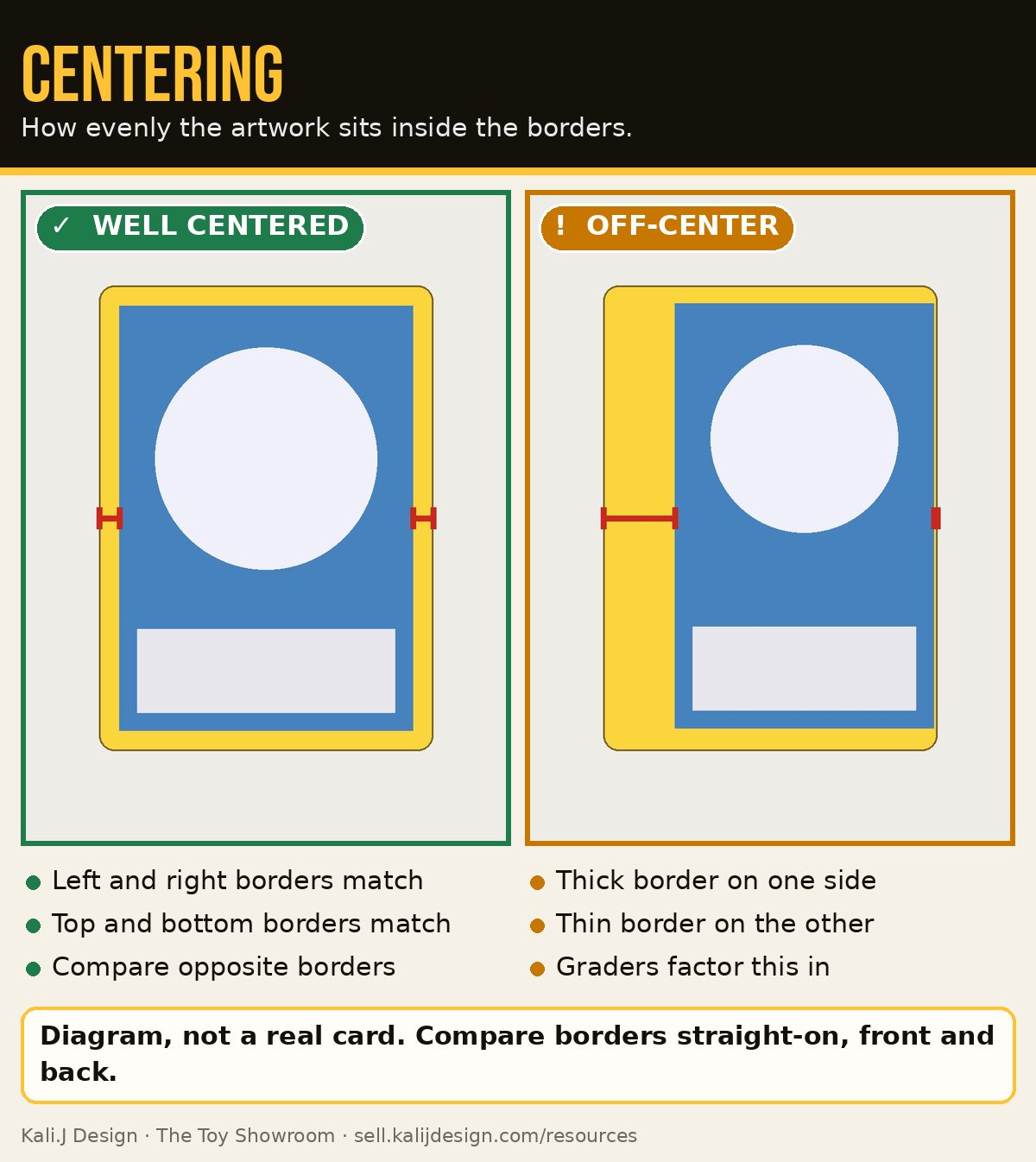
Centering
- What it is
- How evenly the artwork sits inside the borders.
- How to spot it
- Compare left vs right and top vs bottom borders, front and back.
- Why it matters
- Grading standards set centering limits for top grades (see PSA's published standards).
- What to photograph
- Front and back, perfectly straight on.
- When it becomes serious
- Borders that are clearly lopsided.
Dents, stains and ink marks
- What it is
- Pressure dents, water marks, ink or writing.
- How to spot it
- Tilt the card and check both sides.
- Why it matters
- These count as damage.
- What to photograph
- Each mark close up.
- When it becomes serious
- Water damage or writing on the front.
Common mistakes
- Photographing cards in sleeves or top-loadersPlastic hides scratches and adds glare. Photograph the card itself when it is safe to do so.
- Only showing the frontWear usually shows first on the back.
- Calling a card "mint"Describe what you see. The grade belongs to the grader.
Related guides
Selling Pokémon CardsHow Kali.J Design buys Pokémon cards: graded cards, raw cards, sealed packs and boxes, and collections - what we check, what to photograph, and why authentication comes before price.
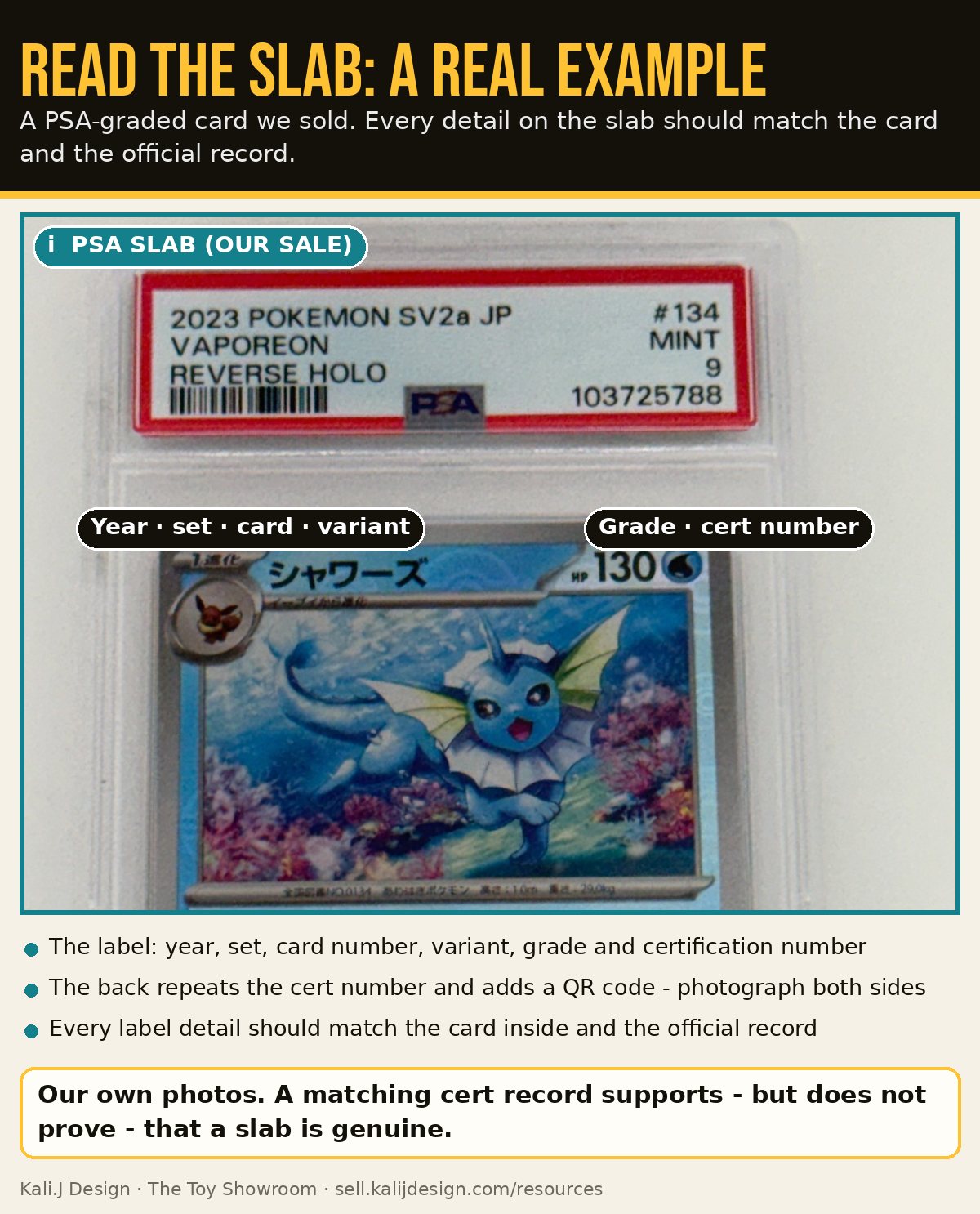
Checking Pokémon Cards & SlabsWhat to check on raw Pokémon cards and graded slabs: official card references, certification lookups at PSA, CGC, SGC, TAG and Beckett, holder and label checks, and when to get expert help.
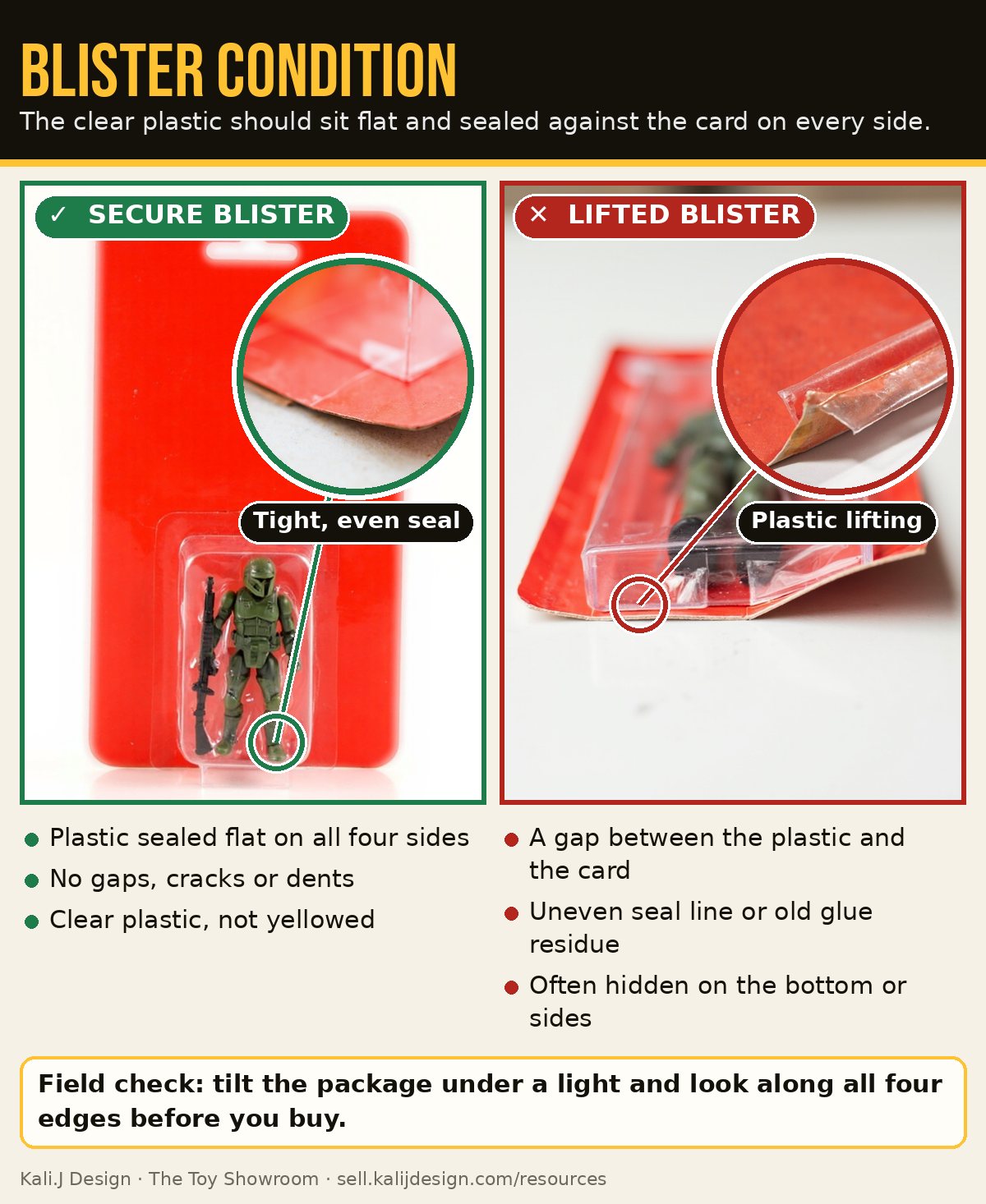
How to Judge Collectible ConditionA practical, category-by-category guide to judging the condition of toys, diecast, sneakers, clothing and video games - what to inspect, what to photograph and what hurts value.
Found one?
Seller Network members can snap a photo and ask the Sourcing Copilot. Anyone can send photos for an official quote based on real sold prices.
Looking to buy instead? Shop trading cards at The Toy Showroom