Updated Oct 2026 from our own sales and inventory
What Pokémon does Kali.J buy?
- Pokémon
- Graded single cards
- PSA
- CGC
- Beckett
- SGC
- TAG
- Raw single cards
- Vintage sets
- Modern sets
- Japanese and other languages
- Sealed product
- Booster packs
- Booster boxes
- Elite Trainer Boxes
- Tins and collection boxes
- Collections and lots — Valuable cards photographed separately
- Graded single cards
- Other trading card games
- One Piece
- Magic: The Gathering
- Yu-Gi-Oh!
- Sports cards
- Graded cards
Why Pokémon gets extra checks
Counterfeit Pokémon cards and packs are common. Pokémon's own support team says fake booster packs can be very difficult to tell apart, that a price far below retail is a strong warning sign, and that it helps to know what genuine product looks like (Pokémon Support). Graded slabs can be faked too: PSA warns that a real certification number can be copied onto a fake label (PSA). So we weigh authentication confidence, where the item came from, its condition, verified sold prices and how quickly it sells - not just what it appears to be worth.
The three lanes
Graded cards (easiest lane)
- What it is
- A card sealed in a grading company holder with a label and certification number - PSA, CGC, Beckett, SGC or TAG.
- What we check
- We look the certification number up with the grading company, compare the card, grade and label with the record (and the grader's images where available), and inspect the holder itself.
- Why it matters
- The grade sets the value, and the certification record is strong supporting evidence - but not proof on its own.
- What to photograph
- Slab front, slab back and a sharp close-up of the label.
- When we hold off
- The record does not match, the cert cannot be found, or the holder shows signs of tampering.
Raw cards (higher caution)
- What it is
- Ungraded single cards, vintage or modern.
- What we check
- Set symbol, card number, copyright line, language, fonts, print quality, holo pattern, card stock and the back design - compared against a known genuine card.
- Why it matters
- Photos can show problems, but they cannot confirm a raw card is genuine. Condition also changes value sharply.
- What to photograph
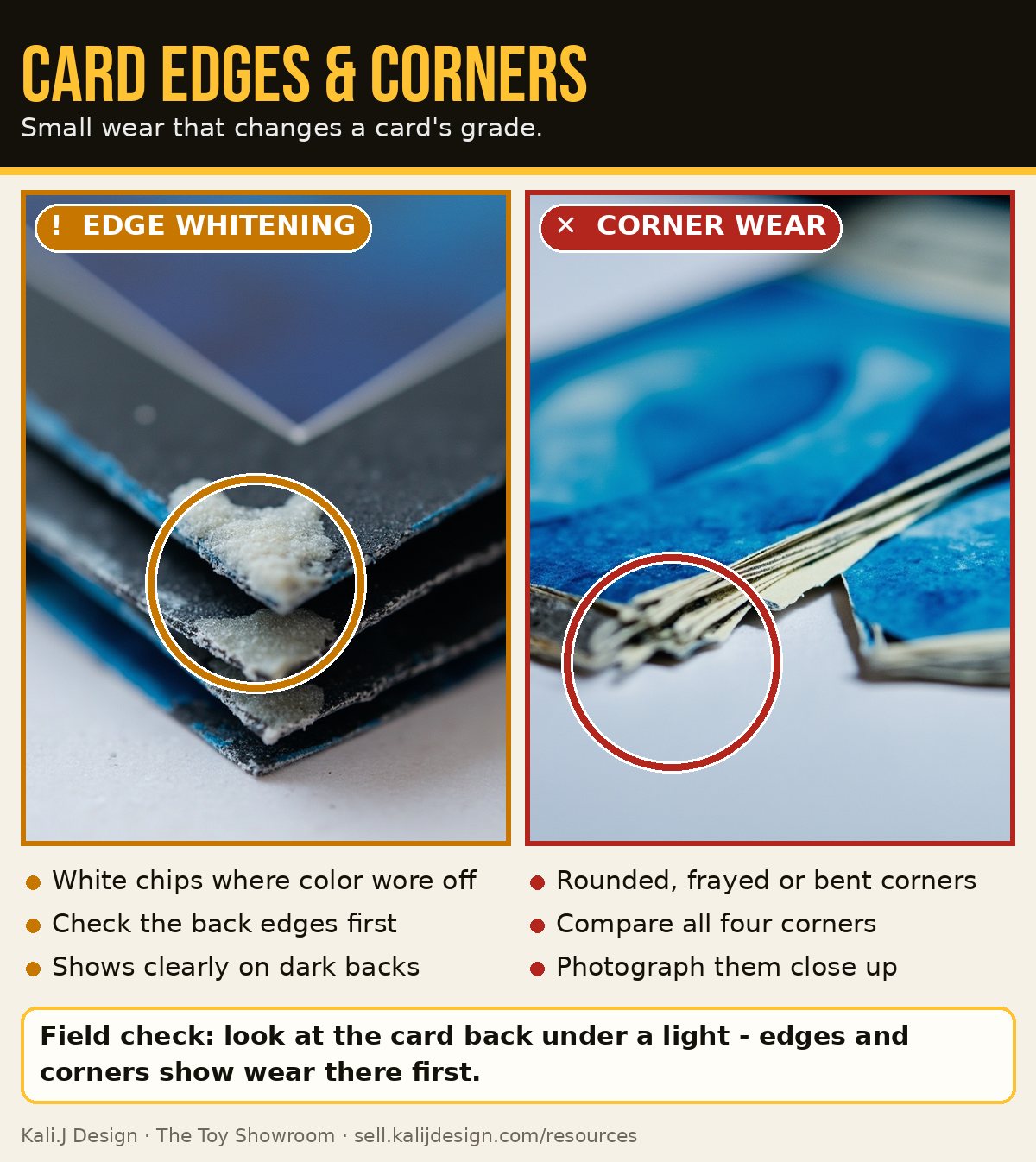
- Front and back, straight on, plus corners and edges close up.
- When we hold off
- Anything that does not match the official card, or a high-value card we cannot examine in person.
Sealed product (highest caution)
- What it is
- Booster packs, booster boxes, Elite Trainer Boxes, tins and other factory-sealed product.
- What we check
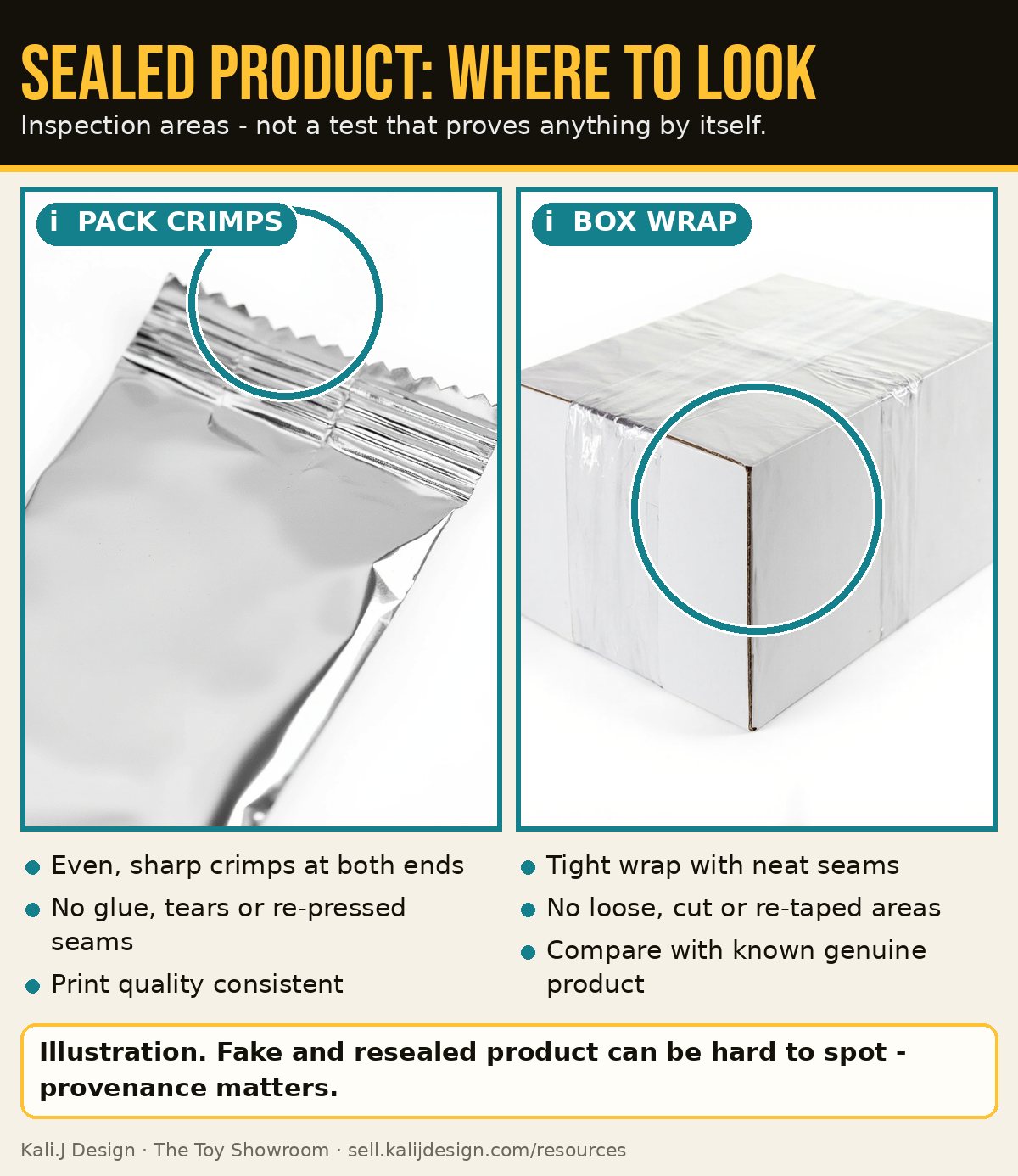
- Packaging print, seals and crimps, wrap, product codes, expected contents and where it came from.
- Why it matters
- Fake and resealed product can look convincing, and it cannot be checked without opening it.
- What to photograph
- Every side, every seam and crimp, the wrap and any barcode.
- When we hold off
- Unclear source, suspicious pricing, or any sign the seal was disturbed.
How we evaluate a graded Pokémon card: a real example
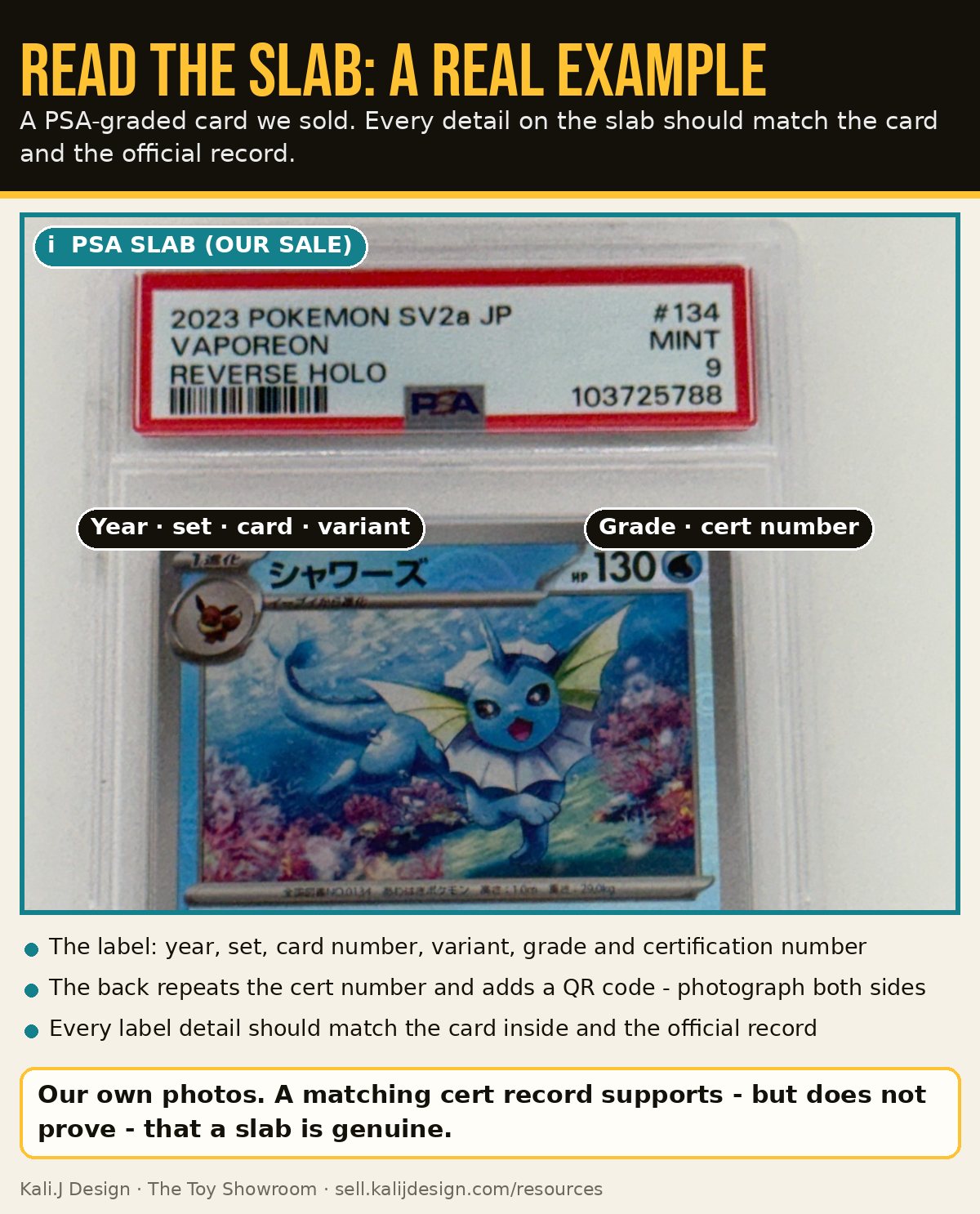
- Read the label. 2023 Pokémon SV2a Japanese, #134 Vaporeon, reverse holo, PSA 9 (Mint).
- Check the record. The certification number on the label is looked up with PSA, and the card, grade and label details must match.
- Inspect the holder and card. Both sides of the slab, the label and the card itself are photographed and compared.
- Price from real sales. Only sold listings for the same card, set, language, variant, grader and grade count.
- Decide. This card sold for about $16 plus shipping. A slab does not make every card valuable - the specific card and grade decide that.
What we are most interested in
- Graded cards with a certification number we can verify
- Raw cards in clean condition that can be identified exactly
- Factory-sealed product from a known source
- Organized collections
What can reduce our interest
- Certification numbers that do not verify or records that do not match
- Any sign of tampering or resealing
- Prices far below the market
- Heavily played raw cards
- An unclear source for high-value or sealed items
What photos to take
- Graded: slab front, slab back, label close-up
- Raw: card front and back straight on, corners and edges close up, holo surface at an angle
- Sealed: all sides, seams, crimps and wrap, plus any barcode
- Collections: an overview photo, then small groups, with any valuable cards pulled out separately
Common mistakes
- Treating a matching cert number as proofReal numbers can be copied. Compare the whole slab and card.
- Pricing from asking pricesMany listings never sell. Use sold prices for the exact card and grade.
- Assuming graded means valuableGrading adds confidence, not automatically value.
- Buying sealed product on price aloneA deal far below retail is a warning sign.
- Mixing languages and variantsJapanese and English cards, holos and reverse holos are priced separately.
Related guides

Found something?
Send us clear photos for a quote. Our offers are based on real sold prices, not asking prices. Local to Upland, CA - or ship it in.
Looking to buy instead? Shop Pokémon at The Toy Showroom · Shop trading cards at The Toy Showroom