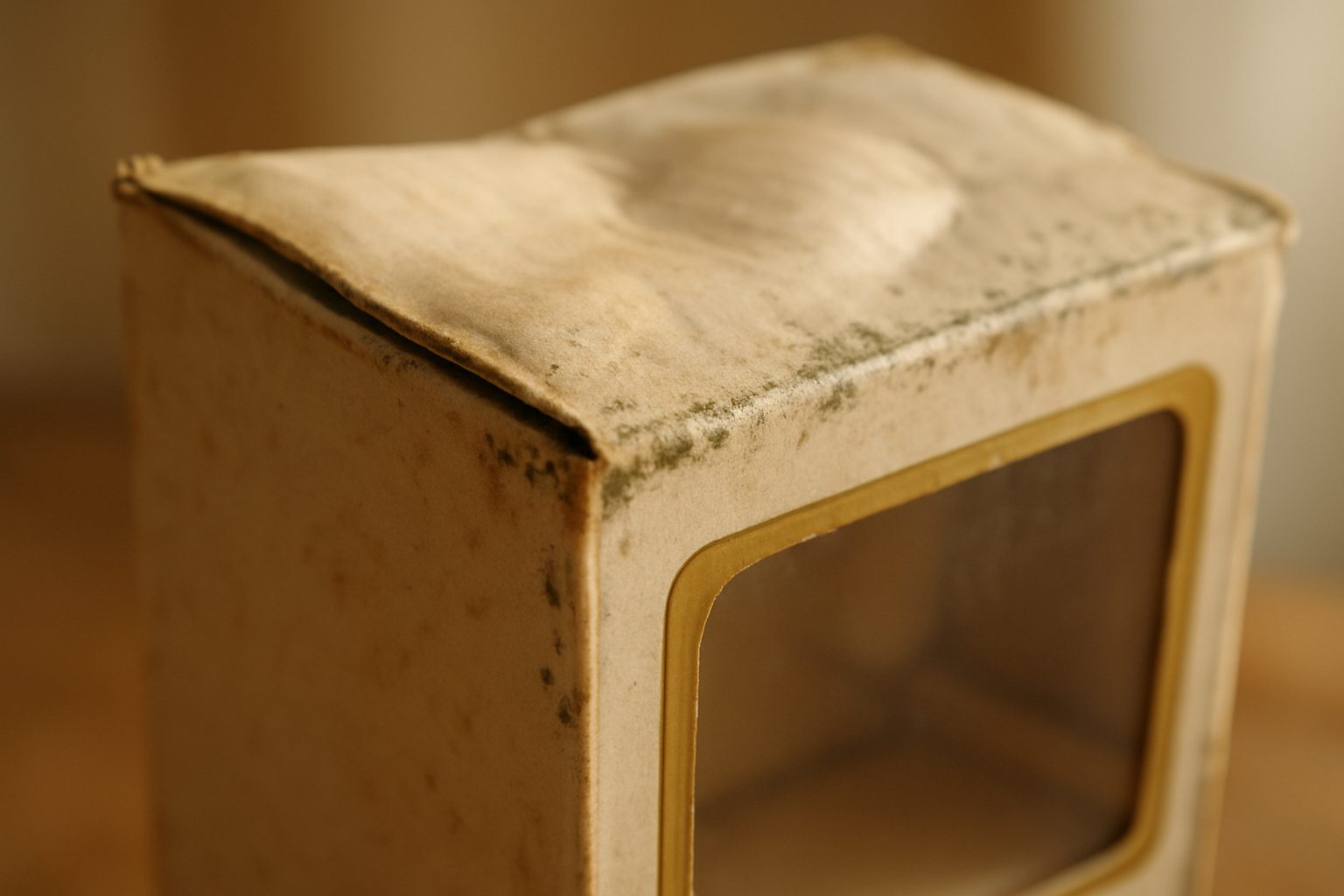
TL;DR: Humidity, heat, light, and dust silently degrade collectibles long before you notice—warping cards, clouding blind box windows, fading paint, and breeding mold. Damage is cumulative and often irreversible, quietly erasing 20–70% of value. Store items cool, dark, dry, and sealed—or sell/consign them before condition slips further.
How exactly does humidity destroy collectible value?
Humidity destroys value by introducing moisture that warps, stains, molds, and corrodes collectibles from the inside out. Cardboard swells, paper foxes, adhesives fail, and metal parts oxidize. The damage is gradual and usually permanent, so a "mint" item can quietly slip two or three condition grades over a single humid season.
Moisture is the single biggest enemy of long-term collectible value. When relative humidity climbs above roughly 55%, you create conditions where:
- Paper and cardboard absorb water, then warp, wrinkle, and develop brown "foxing" spots.
- Adhesives on stickers, box seals, and blind box flaps loosen or bubble.
- Metal on die-cast cars, coins, and figure joints tarnishes and rusts.
- Mold and mildew colonize plush, packaging, and paper—often unremovable.
Because collectors and buyers grade on condition, even faint moisture damage moves an item from "Near Mint" to "Played" territory, and price follows condition closely.
What does heat and temperature swing do to figures and packaging?
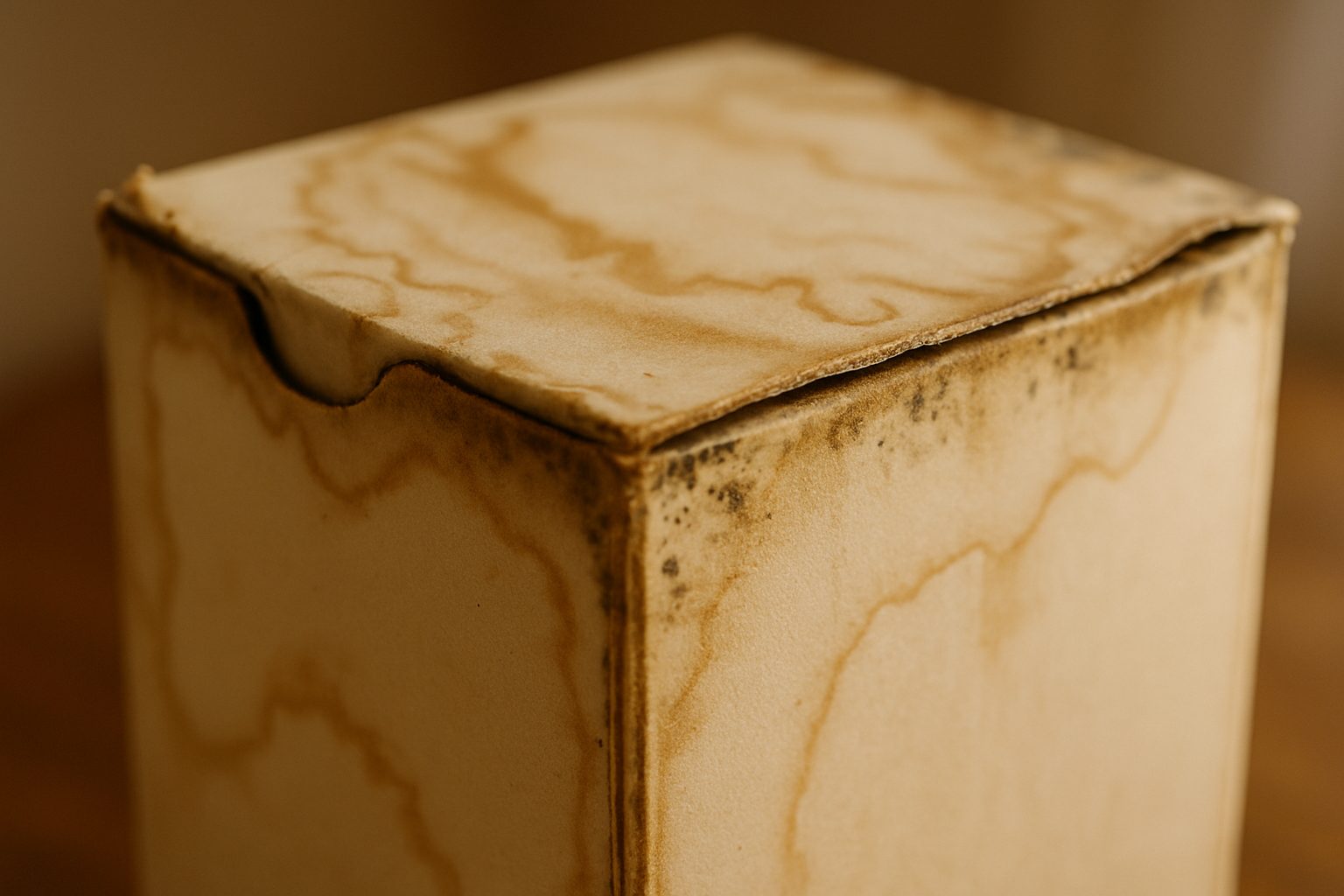
Heat and temperature swings warp plastic, soften vinyl, crack paint, and make packaging brittle. Repeated hot-cold cycles—like a garage in summer—cause expansion and contraction that separates seams, yellows clear windows, and lifts printed graphics. This kind of damage is cumulative and cannot be reversed once it sets.
Vinyl and PVC figures are especially vulnerable. This matters right now for Labubu blind box figures from POP MART, which use soft vinyl and printed blind box packaging that buyers inspect closely. Store a sealed Labubu box in a hot car or attic and you risk:
- Warped or sagging vinyl on the figure itself.
- Yellowed or clouded plastic windows on display boxes.
- Curled, faded box art that kills resale premiums for sealed, unopened stock.
Sealed condition drives much of a blind box's secondary value. Once heat compromises the box, you're often selling a figure at a fraction of its sealed price.
Why is light exposure such an underrated threat?
Light—especially UV and direct sunlight—fades dyes, bleaches box art, and yellows plastic permanently. Unlike dust, light damage can't be cleaned off; the pigment is chemically altered. A figure displayed in a sunny window can fade noticeably within months, and faded packaging or paint routinely halves collector demand.
UV radiation breaks down the chemical bonds in inks and plastics. The results collectors dread most:
- Sun-faded box spines on figures displayed on shelves.
- Yellowing white plastic on older figures and modern vinyl alike.
- Washed-out paint apps on faces and details.
Fluorescent and some LED lighting emit UV too, so "indoor" display isn't automatically safe. If an item is meant to hold value, keep it out of direct and prolonged light.
What are the warning signs my collectibles are already being damaged?
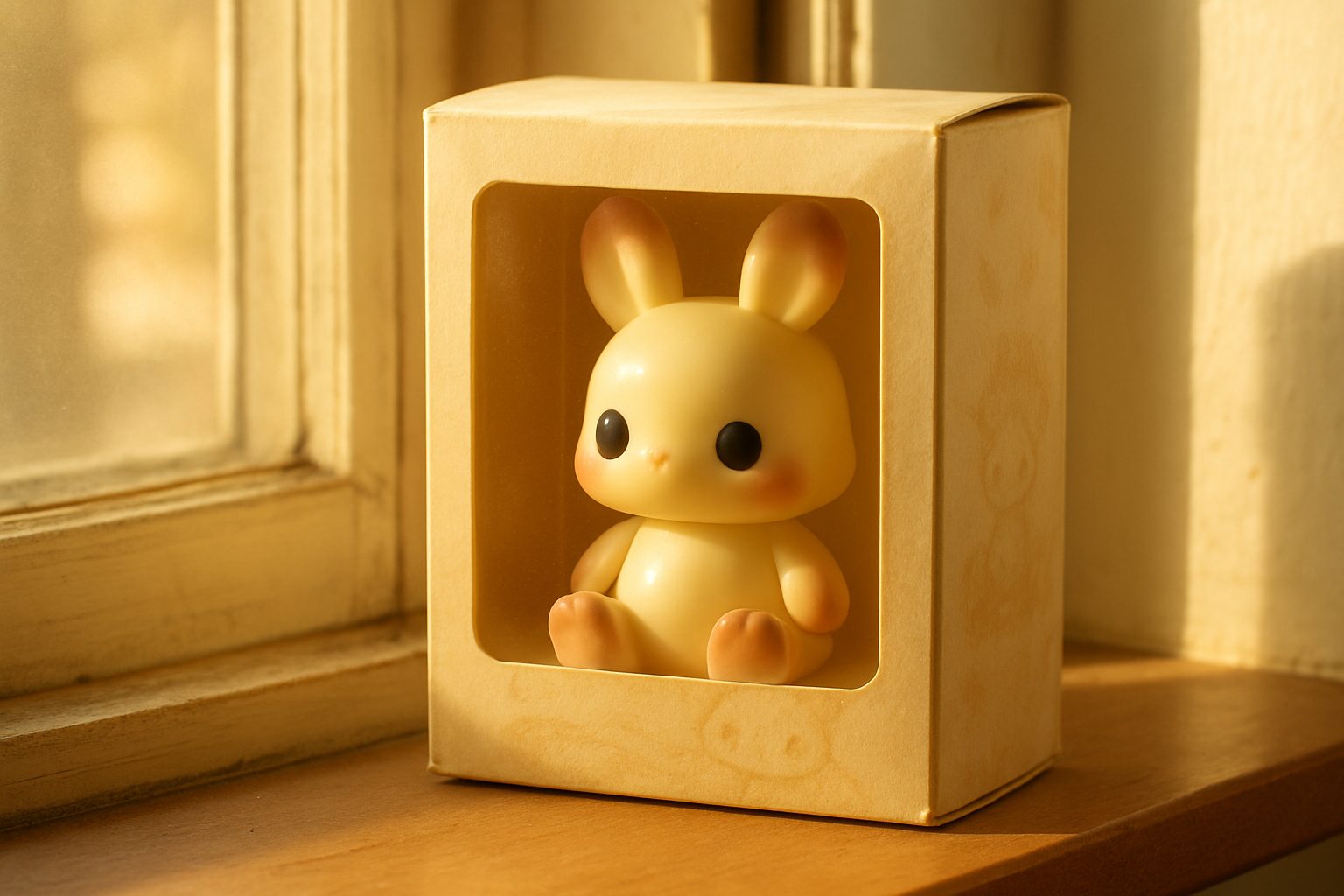
Watch for musty smells, cloudy or yellow plastic, warped cardboard, sticky or lifting stickers, white haze on chrome, and spotting on paper. These are early signs of moisture, heat, or light damage. Once you notice them, the value has usually already dropped—acting quickly limits further loss.
Do a quick audit of anything you've stored in a garage, attic, basement, or closet:
- Musty or "old book" smell = mold or mildew activity.
- Soft, wavy, or swollen cardboard = humidity exposure.
- Cloudy blister packs or windows = heat and off-gassing.
- Green or white fuzz on plush/paper = active mold (isolate immediately).
If you see these on higher-value pieces, it's often smarter to liquidate now than to watch condition—and price—keep sliding.
How should I store collectibles to protect their value?
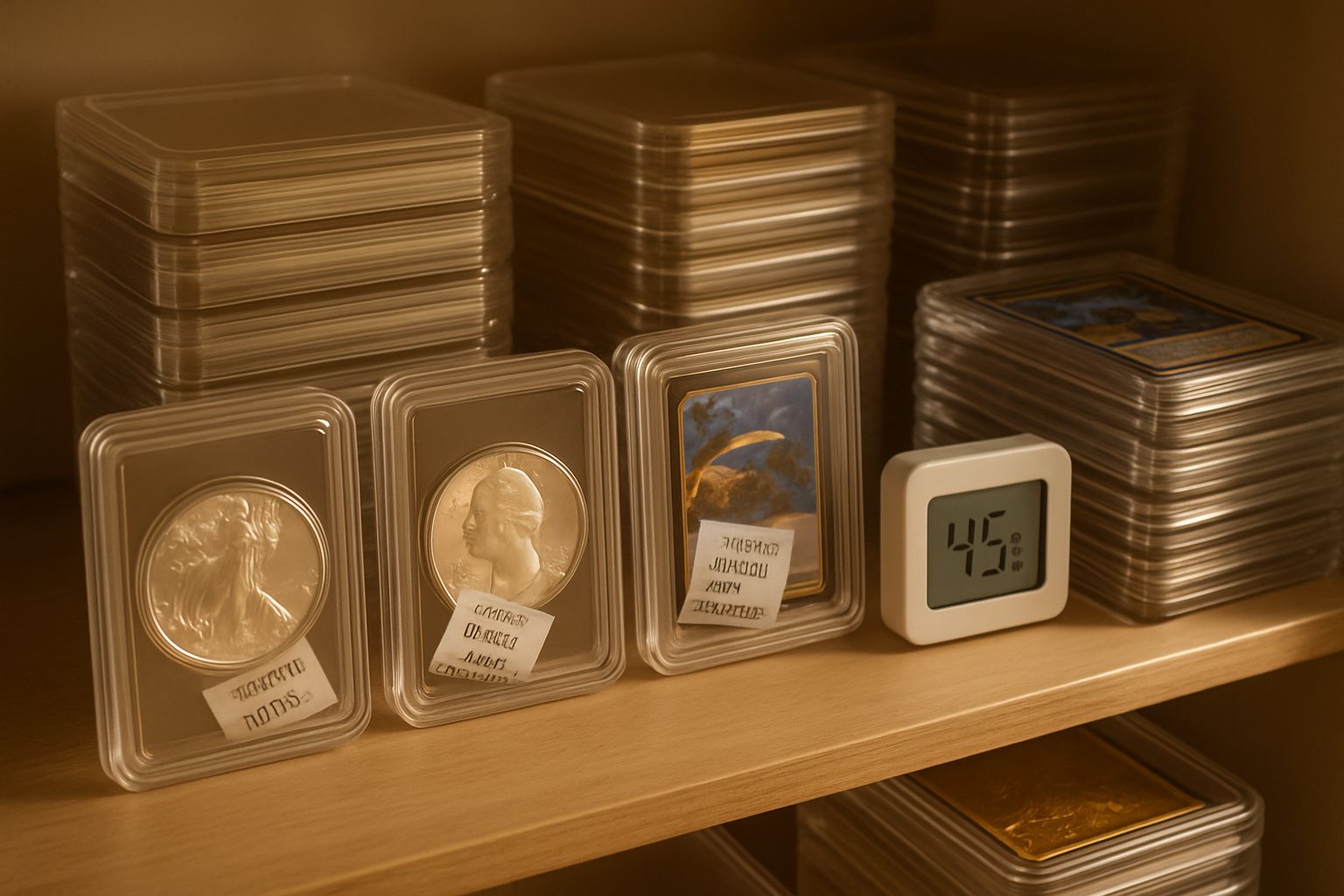
Store collectibles cool, dark, dry, and sealed. Aim for stable temperatures around 65–70°F and relative humidity near 45–50%, using airtight cases, acid-free materials, and silica gel. Keep everything off concrete floors and out of direct light. Stable conditions matter more than perfect ones—swings cause the most damage.
Practical setup:
- Use hard cases or acid-free sleeves/boxes rather than open shelves.
- Add silica gel packs to sealed containers and replace them periodically.
- Keep a cheap hygrometer in your storage area to monitor humidity.
- Store in a climate-controlled interior room, never a garage or attic.
- Elevate boxes off concrete, which wicks moisture.
Good storage costs money and attention over years. For many sellers, the math favors converting collectibles to cash or consignment while condition is still strong.
When is it smarter to sell or consign instead of storing?
Sell or consign when storage risk outweighs upside—when you lack climate control, hold duplicates, or own pieces already showing wear. Locking in value today beats gambling on years of ideal conditions. A trusted buyer removes ongoing storage risk entirely and converts fragile inventory into cash or managed sales.
At Kali.J Design (The Toy Showroom) in Upland, CA, you have two easy paths:
- Sell for cash. Get a 24-hour coded offer and get paid at drop-off—no storage worries, no condition gamble. Sell your collectibles for cash.
- Consign and keep 60% of net. We handle photography, shipping, and returns and place your items across eBay, Amazon, Whatnot, weekly auctions, and our showroom. Consign with us.
Either way, you stop the slow bleed of humidity, heat, and light—and turn at-risk pieces into real value.
FAQ
Does storing collectibles in plastic totes prevent humidity damage? Not alone. Cheap totes trap humid air and can promote mold. Use airtight containers with silica gel and store them in a climate-controlled room, not a garage.
Are sealed blind boxes like Labubu safe from damage? No. Sealed Labubu and other blind boxes still suffer from heat-warped vinyl, yellowed windows, and faded box art. Sealed condition is fragile and heavily affects resale value.
Can mold or fading be reversed on a collectible? Usually not. Mold staining and UV fading chemically alter materials. Prevention or early sale is far more effective than attempting restoration.
What humidity level is ideal for storing collectibles? Around 45–50% relative humidity with stable temperatures near 65–70°F. Avoid swings, which cause more cumulative damage than a steady, slightly-off level.
How do I get a fast offer if my items show storage wear? Request a 24-hour coded offer through The Toy Showroom. We assess condition honestly and can pay cash at drop-off or list items on consignment for you.