TL;DR: Authenticate a designer handbag with five checks: stitching and construction, hardware and zippers, logo and font, interior serials and tags, and materials plus smell. Compare every detail to verified reference photos of that exact model and year. One failed check is a red flag; two or more usually means counterfeit.
What is the fastest way to spot a fake designer handbag?
Run five checks in order—stitching, hardware, logo and font, interior serials, and materials—and compare each to verified reference photos of the exact model and production year. A single failed check is a warning; two or more almost always confirms a counterfeit. Speed comes from knowing where to look.
Authentication is pattern recognition. Brands like Louis Vuitton, Chanel, Hermès, Gucci, and Dior follow strict, repeatable standards, and fakes almost always break at least one of them. Below are the five checks, in the order a professional actually uses them.
Check 1 — Does the stitching and construction look right?
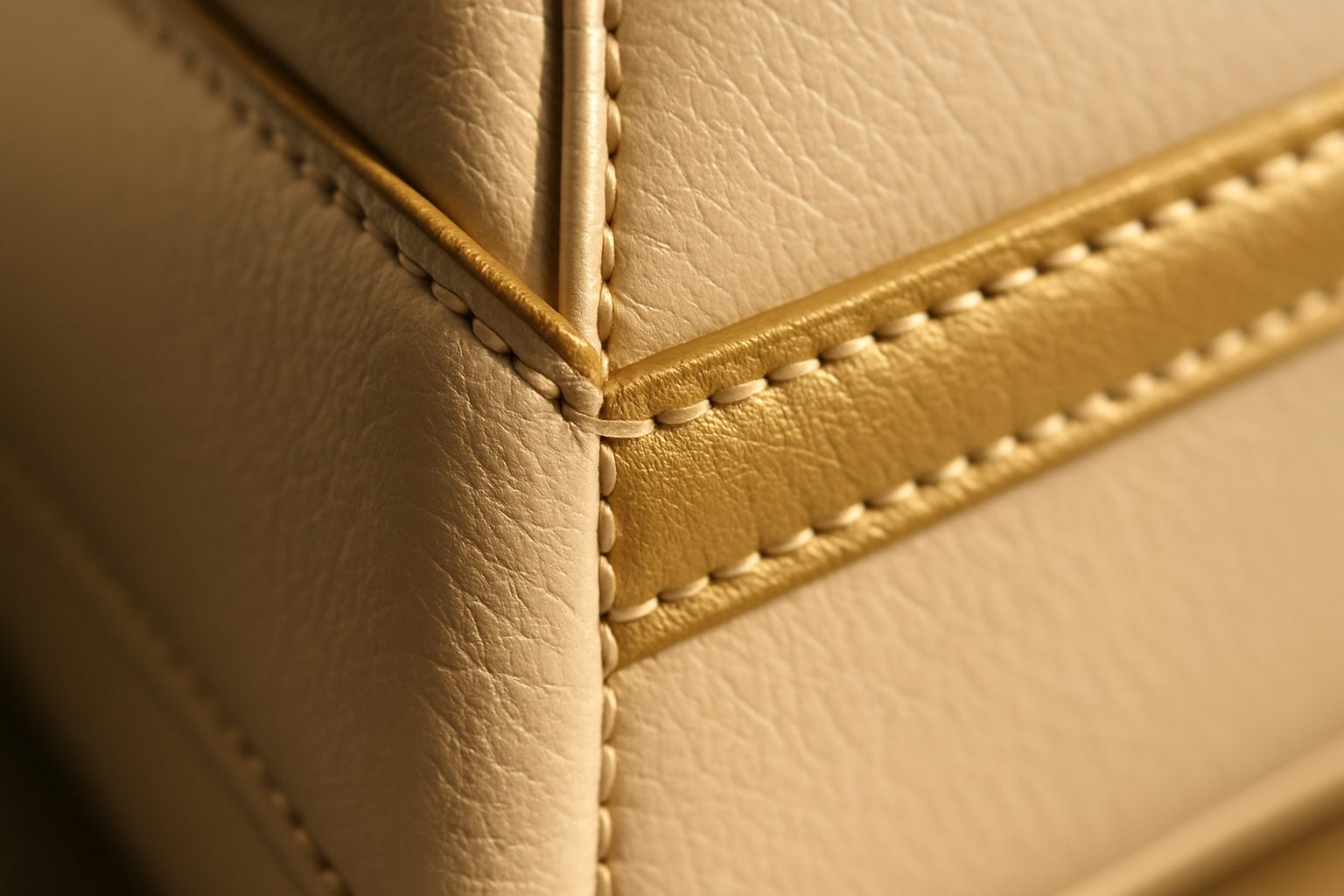
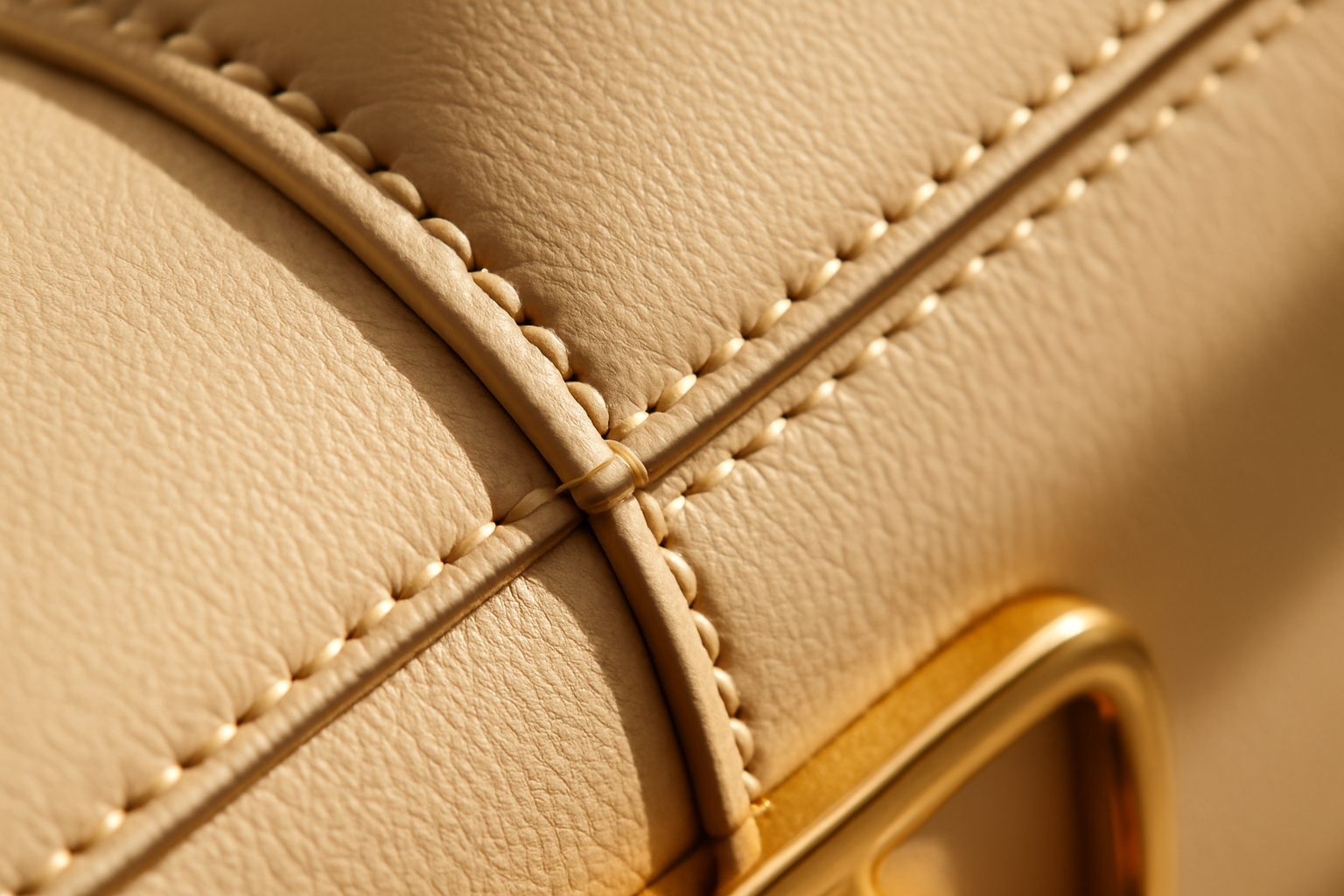
Authentic designer bags use dense, even stitching with a consistent stitch count per inch, no loose threads, and perfectly symmetrical panels. Real Louis Vuitton monograms and Chanel quilting align across seams, never cutting off a pattern awkwardly. Crooked stitches, glue residue, or mismatched panels signal a counterfeit.
- Look for even tension and a straight, uniform stitch line.
- Check that patterns (monogram, quilting, stripes) match across every seam.
- Inspect corners and handles—stress points where fakes get sloppy.
Check 2 — What should the hardware, zippers, and feet reveal?
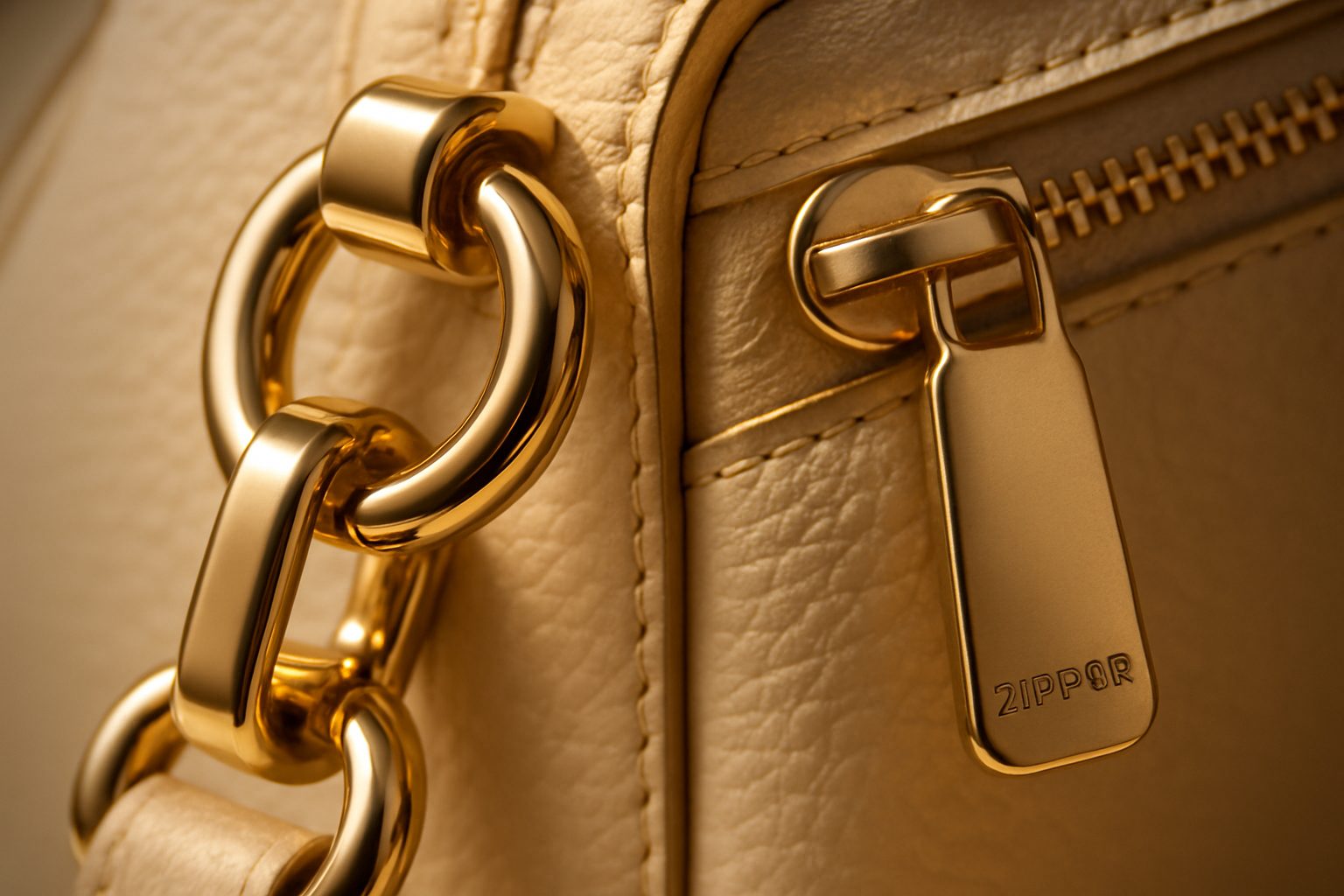
Genuine hardware is heavy, smoothly finished, and cleanly engraved—never shallow-stamped or spray-painted. Zippers from YKK, Lampo, or brand-marked pulls glide without catching. Logos on clasps, feet, and rivets are crisp and correctly spelled. Lightweight, tarnished, or wobbly hardware is one of the most reliable tells of a fake.
- Feel the weight: real metal hardware has heft.
- Test zippers—they should move smoothly, not snag.
- Examine engraving under light for clean, deep, even lettering.
Check 3 — Is the logo, font, and heat stamp exact?
The logo, font spacing, and heat stamp must match the brand standard precisely. Count the letters, measure the spacing, and check registration symbols. Chanel's interlocking Cs, Gucci's GG, and Dior's oblique all follow strict proportions. Blurry embossing, wrong kerning, or a stamp that's too deep or crooked reveals a counterfeit.
Heat stamps on authentic bags are crisp and consistent in depth. Many counterfeits press too hard, leaving a stamp that looks burned or uneven. Compare font weight and letter shapes to a verified image of the same era, since brands do update their stamps over time.
Check 4 — Where are the serial number, date code, or microchip?
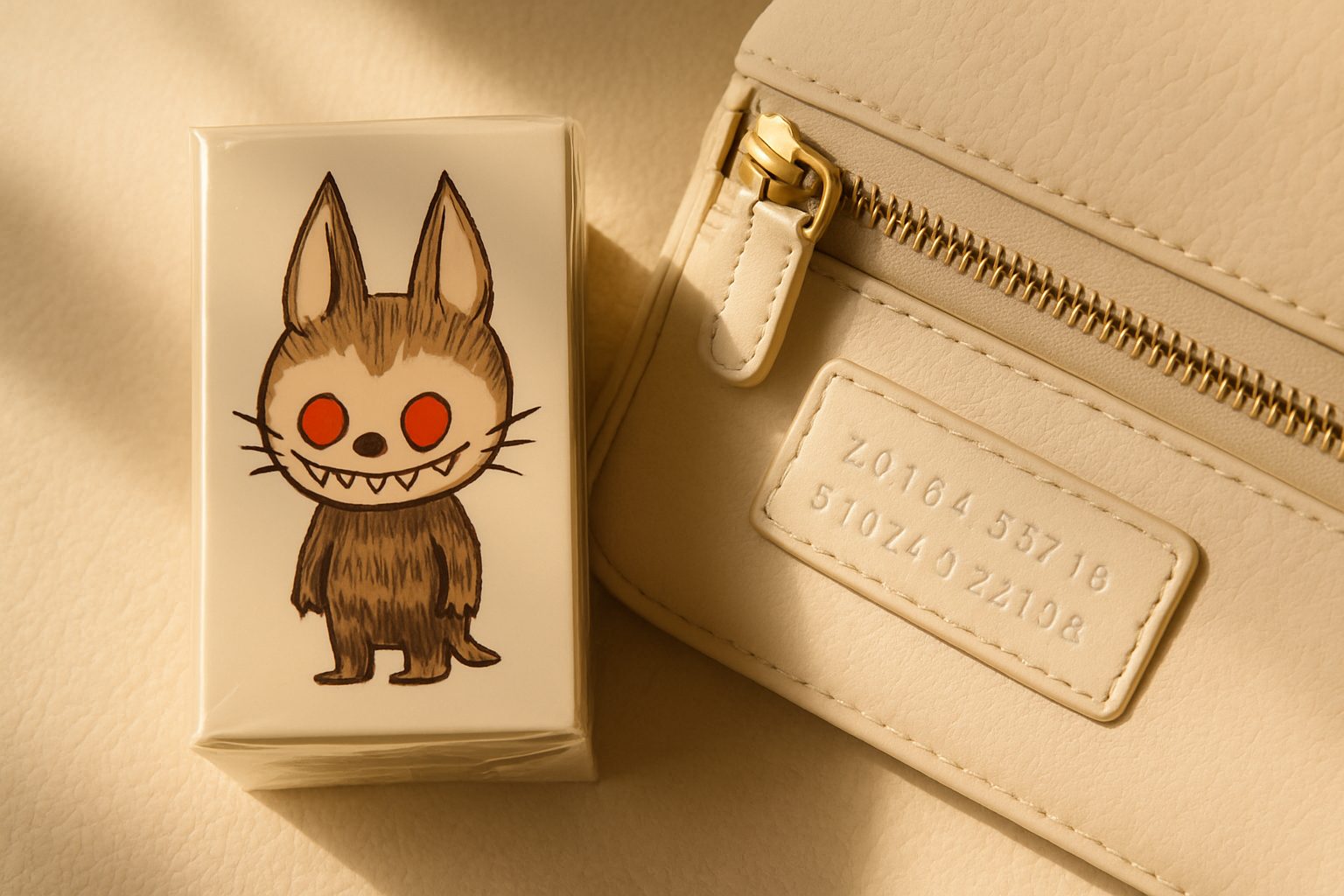
Locate the serial number, date code, or microchip and confirm it matches the model, factory, and production era. Louis Vuitton replaced date codes with embedded microchips in 2021, and Chanel moved from serial stickers to chips around the same time. A missing, reused, or wrong-format code is a major red flag.
- Confirm the code's format matches the year the bag was supposedly made.
- Check placement—codes live in brand-specific, consistent locations.
- Beware peeling or reprinted stickers; authentic ones are cleanly applied.
Check 5 — What do the materials, lining, and smell tell you?
Real leather smells rich and natural, feels supple, and shows subtle grain variation; genuine canvas and lining feel substantial. Counterfeits often smell of chemicals, plastic, or glue and use stiff, uniform "leather." Check the lining fabric, edge paint, and overall weight against the authentic specification for that model.
Edge paint on a real bag is smooth and evenly applied; fakes crack or glob. Trust your senses—an off smell or a plasticky feel is often the first honest clue, even before you spot a flaw.
How does the Labubu blind box craze relate to handbag authentication?
The Labubu The Monsters blind box boom shows the same authentication problem in miniature. "Lafufu" counterfeits now flood the market, so collectors verify Pop Mart QR codes, packaging fonts, foot stamps, and paint quality before they pay. Whether it's a $20 blind box or a $2,000 handbag, the discipline is identical: compare to verified references first.
The lesson translates directly. Hype drives fakes—the hotter the item, the more counterfeits appear. Slow down, check the details, and use trusted references or a professional whenever the value is real.
Should I authenticate before I sell or consign a designer bag?
Yes—verifying authenticity before you sell protects your payout and your reputation. At The Toy Showroom in Upland, CA, we authenticate designer bags and collectibles in-house, then buy them for cash or consign them for you so you keep 60% of net while we handle photography, shipping, and returns.
An authenticated bag sells faster and for more. If you'd rather skip the hassle, submit photos at sell.kalijdesign.com/sell for a 24-hour coded cash offer, or let us list it across eBay, Amazon, Whatnot, and our weekly auctions. Either way, you get expert eyes on your item before it hits the market.
FAQ
Can I authenticate a designer handbag at home? Yes, for a first pass. Run the five checks above against verified reference photos of the same model and year. For high-value bags or anything uncertain, confirm with a professional authenticator before buying, selling, or consigning.
Is a serial number alone proof a bag is real? No. Counterfeiters copy real serial numbers and date codes. A code must match the correct format, placement, and production era, and it should be backed by passing stitching, hardware, and material checks.
Do authentic designer bags come with a certificate of authenticity? Usually not. Most luxury brands, including Louis Vuitton and Chanel, do not issue standalone certificates. Be cautious of a bag whose main "proof" is a generic authenticity card, which fakes often include.
Are Labubu blind boxes really faked like handbags? Yes. Pop Mart's Labubu The Monsters line spawned widespread "Lafufu" counterfeits. Collectors verify QR codes, packaging, and finish quality—proof that authentication habits matter at every price point.
What's the difference between selling and consigning my bag? Selling gets you cash, paid at drop-off, through a 24-hour coded offer. Consigning takes a bit longer but pays 60% of net, and we manage listing, photography, shipping, and returns for you.