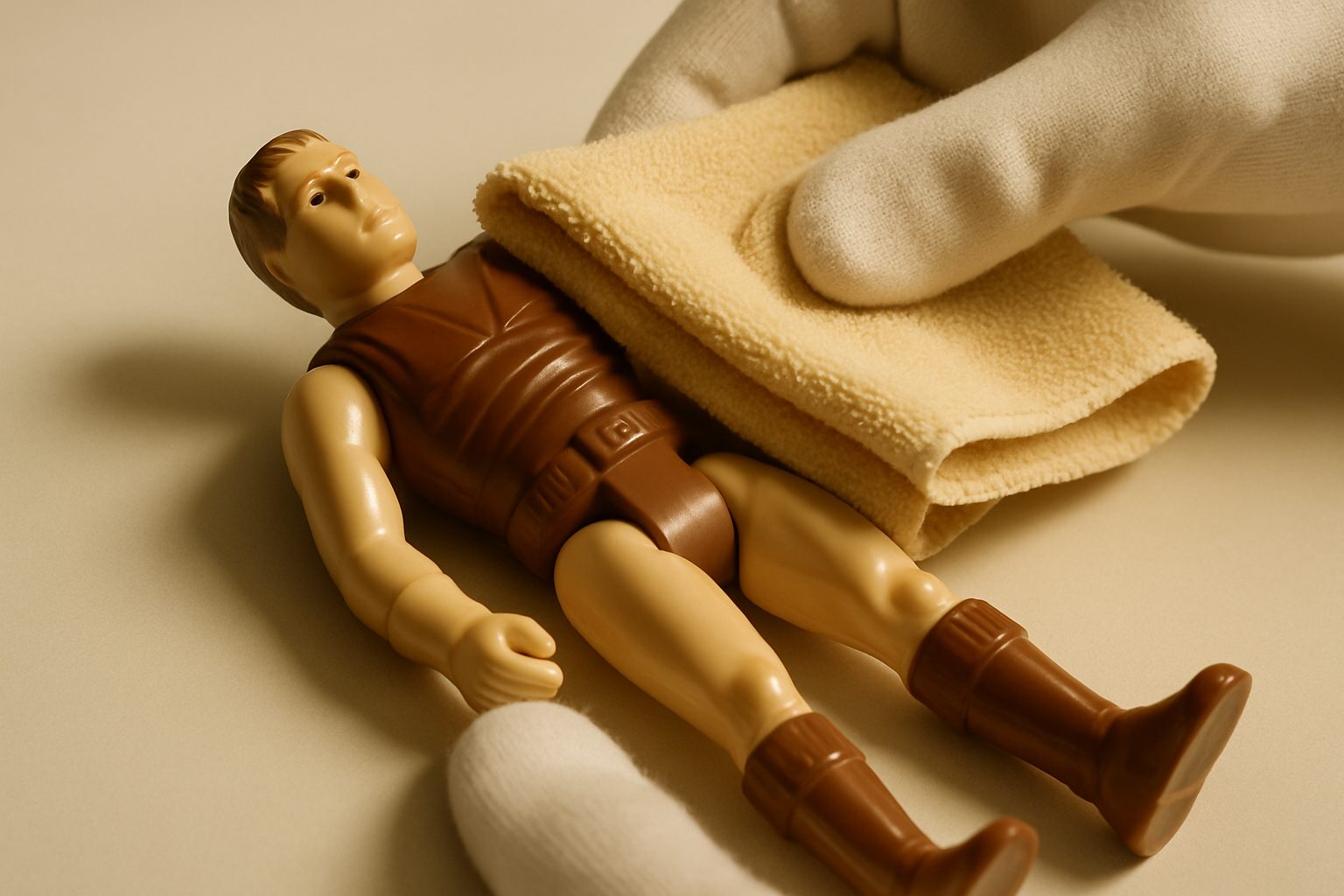
TL;DR: Clean vintage toys with the gentlest method possible—dry dusting, a barely-damp microfiber cloth, and no harsh chemicals. Never repaint, sand, or over-restore, since original condition drives value. Store away from sunlight, heat, and humidity, and keep boxes and accessories. When in doubt, do less and sell or consign as-is.
What's the safest way to clean a vintage toy without hurting its value?
The safest method is the least invasive one: start with dry dusting using a soft microfiber cloth or a clean makeup brush, then spot-clean only if needed with a barely-damp cloth and a drop of mild dish soap. Original paint, decals, and factory finish are what collectors pay for—so remove dirt, not history.
Work in stages and stop the moment the grime lifts:
- Dust first with a dry microfiber cloth, soft brush, or a can of compressed air for crevices.
- Spot-clean with a slightly damp cloth—never soak plastic, vinyl, or diecast.
- Dry immediately with a lint-free cloth to prevent water spots and rust on metal parts.
- Test any product on a hidden area first, like the underside of a base.
What lifts a little dirt today can strip decades of value tomorrow. Less is almost always more.
Which cleaning products damage collectibles?
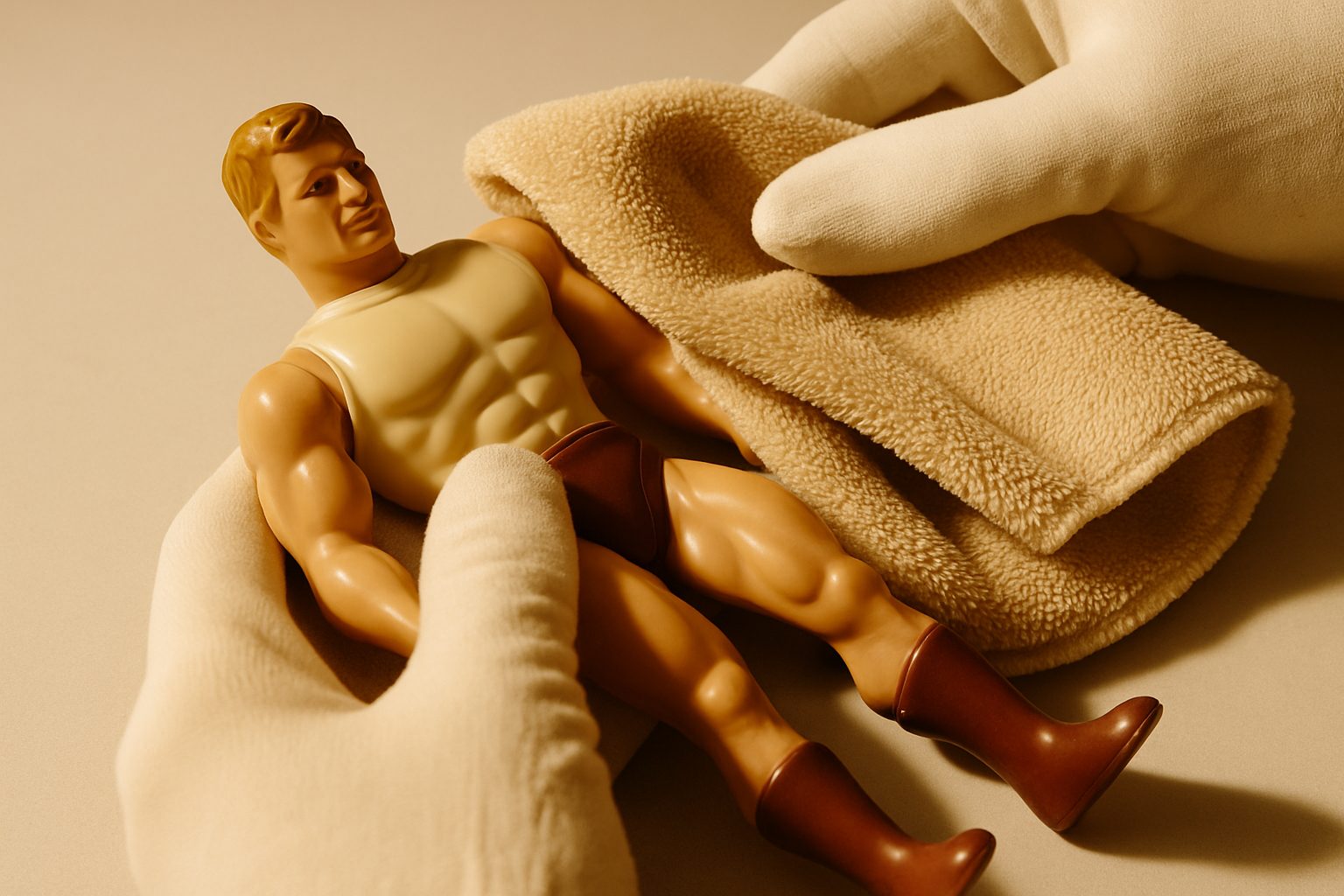
Avoid anything abrasive or solvent-based: alcohol, acetone, nail polish remover, Magic Eraser sponges, bleach, and "whitening" pastes can dissolve paint, cloud plastic, and erase tampo (printed) details permanently. These are the fastest ways to turn a valuable original into a damaged piece worth a fraction of its price.
Specific things that ruin value:
- Isopropyl alcohol and acetone — melt paint and factory decals on action figures and diecast.
- Melamine "eraser" sponges — micro-sand the surface and dull the finish.
- Sunlight or UV "restoration" — yellowing (called "ambering") on white plastic often can't be safely reversed at home; DIY peroxide methods can make it worse.
- Repainting or touch-ups — even skilled repaints usually lower value versus honest wear, because collectors and graders prize originality.
Grading services like WATA, CGC, and AFA reward untouched, original condition. Restoration is a specialized skill—when unsure, don't.
How do I clean modern blind-box figures like Labubu?
Treat Labubu and other Pop Mart blind-box figures gently: their soft vinyl and flocked or matte finishes scratch and stain easily. Dust with a dry soft brush, spot-clean smudges with a barely-damp cloth, and never scrub the face or plush texture. For these, the box, card, and unopened "secret" chase figures matter enormously to value.
Blind-box collectors care about completeness as much as cleanliness:
- Keep the box, insert, and any authentication card—sealed or complete sets command premiums.
- Handle flocked (fuzzy) versions with clean, dry hands; oils and dust cling to the texture.
- Store standing upright away from other figures so paint doesn't transfer.
Modern collectibles like Labubu follow the same rule as a 1980s action figure: originality and packaging win.
How should I store vintage toys to protect them long term?
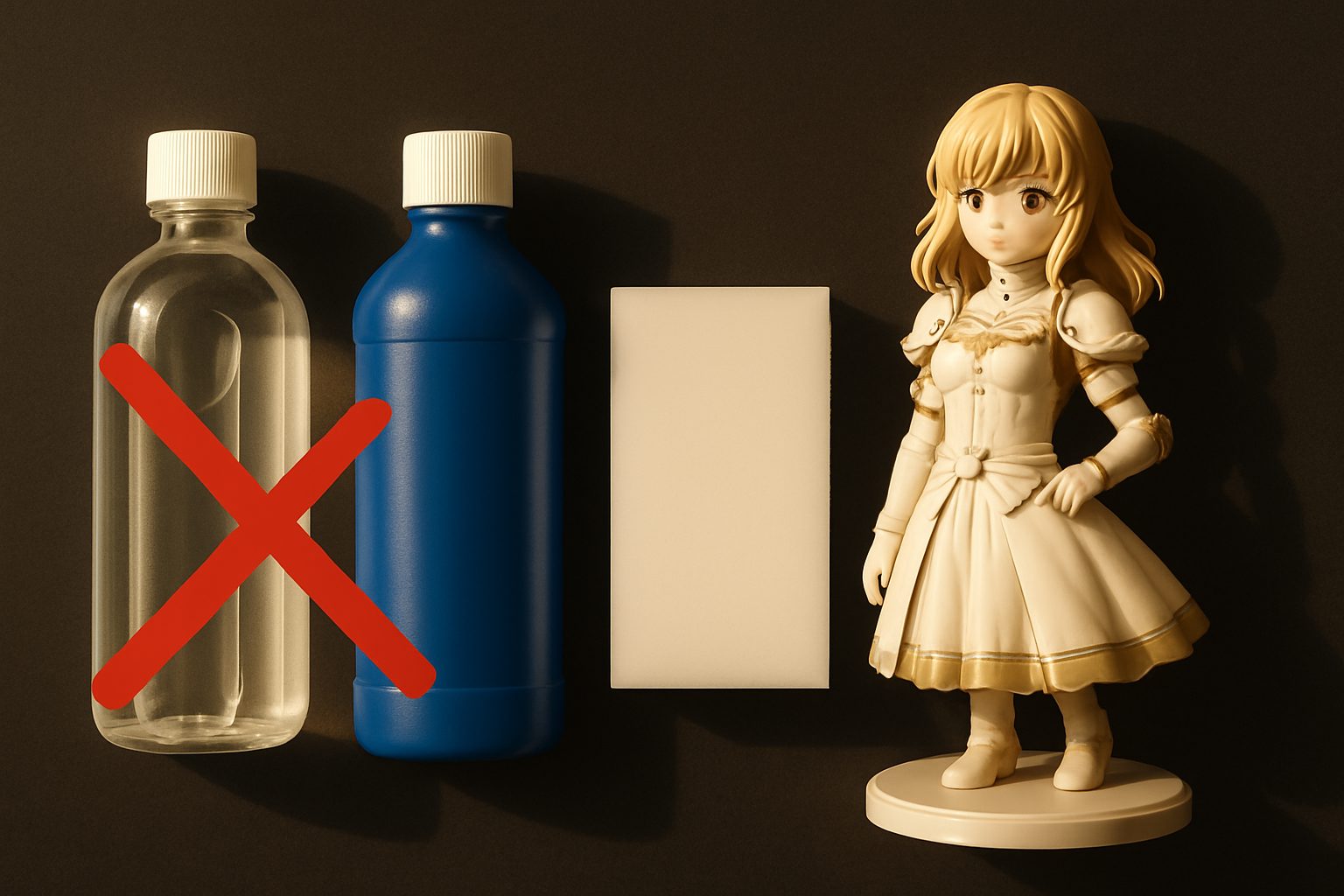
Store collectibles in a cool, dark, dry, and stable environment—ideally 60–70°F with moderate humidity, out of direct sunlight and away from attics, garages, and basements. Sunlight fades and yellows plastic, heat warps vinyl, and humidity breeds mold and rust. Stable conditions preserve both the toy and its packaging.
A simple, effective storage setup:
- Acid-free tissue and archival boxes for loose figures and cloth items.
- UV-resistant display cases if you show pieces on shelves.
- Silica gel packs in bins to control moisture.
- Original boxes stored flat or upright, never crushed under weight.
- Keep accessories, instructions, and inserts together—a complete toy can be worth multiples of an incomplete one.
Avoid sealing soft plastics in airtight bags long-term; some materials off-gas and stick. Ventilated, stable storage beats a tight seal.
When should I stop cleaning and just sell or consign?
Stop the moment cleaning stops being safe—if you're tempted to sand, repaint, bleach, or "restore" a piece to boost its price, that's the signal to leave it as-is and let the market value the original. Buyers routinely pay more for honest, untouched condition than for an amateur restoration.
If you'd rather not risk it, you don't have to handle it alone. At The Toy Showroom (Kali.J Design) in Upland, CA, we make it simple:
- Want a cash offer? We buy collectibles outright for cash with 24-hour coded offers—get started here.
- Want top dollar over time? Consign with us and keep 60% of the net while we handle professional photography, shipping, and returns across eBay, Amazon, Whatnot, weekly auctions, and our showroom.
Either way, present your items clean-but-original. We'll help you understand what condition really means for your specific pieces—no over-restoration required.
FAQ
Does cleaning a vintage toy lower its value? Gentle dust and grime removal won't hurt value and often helps presentation. Value drops when cleaning removes original paint, decals, or finish—or when "restoration" like repainting and sanding replaces authentic wear.
Should I open a sealed Labubu or vintage toy to clean it? No. Sealed and unopened items are usually worth more sealed. Don't open packaging to clean or inspect—an intact seal is part of the value.
How do I remove yellowing from old white plastic? Carefully, or not at all. DIY peroxide/UV methods can cause uneven color or brittleness. For valuable pieces, sell as-is or consult a professional rather than risking permanent damage.
Is it okay to use warm soapy water on action figures? A barely-damp cloth with a drop of mild soap is fine for hard plastic. Never submerge figures with paint apps, cloth, electronics, or paper labels, and always dry immediately.
How do I know if my toy is worth selling or consigning? Condition, completeness, and demand decide it. Submit photos to The Toy Showroom for a free assessment at sell.kalijdesign.com/sell—we offer cash or 60%-net consignment based on what fits your goals.